A Hat Makers Bone Tool

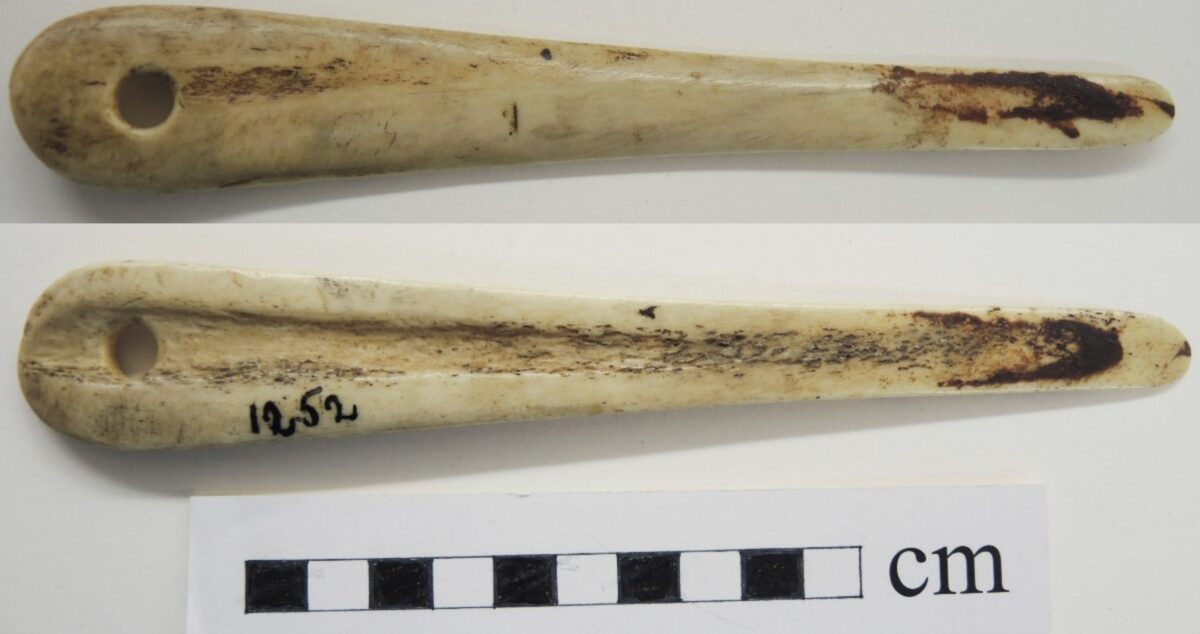
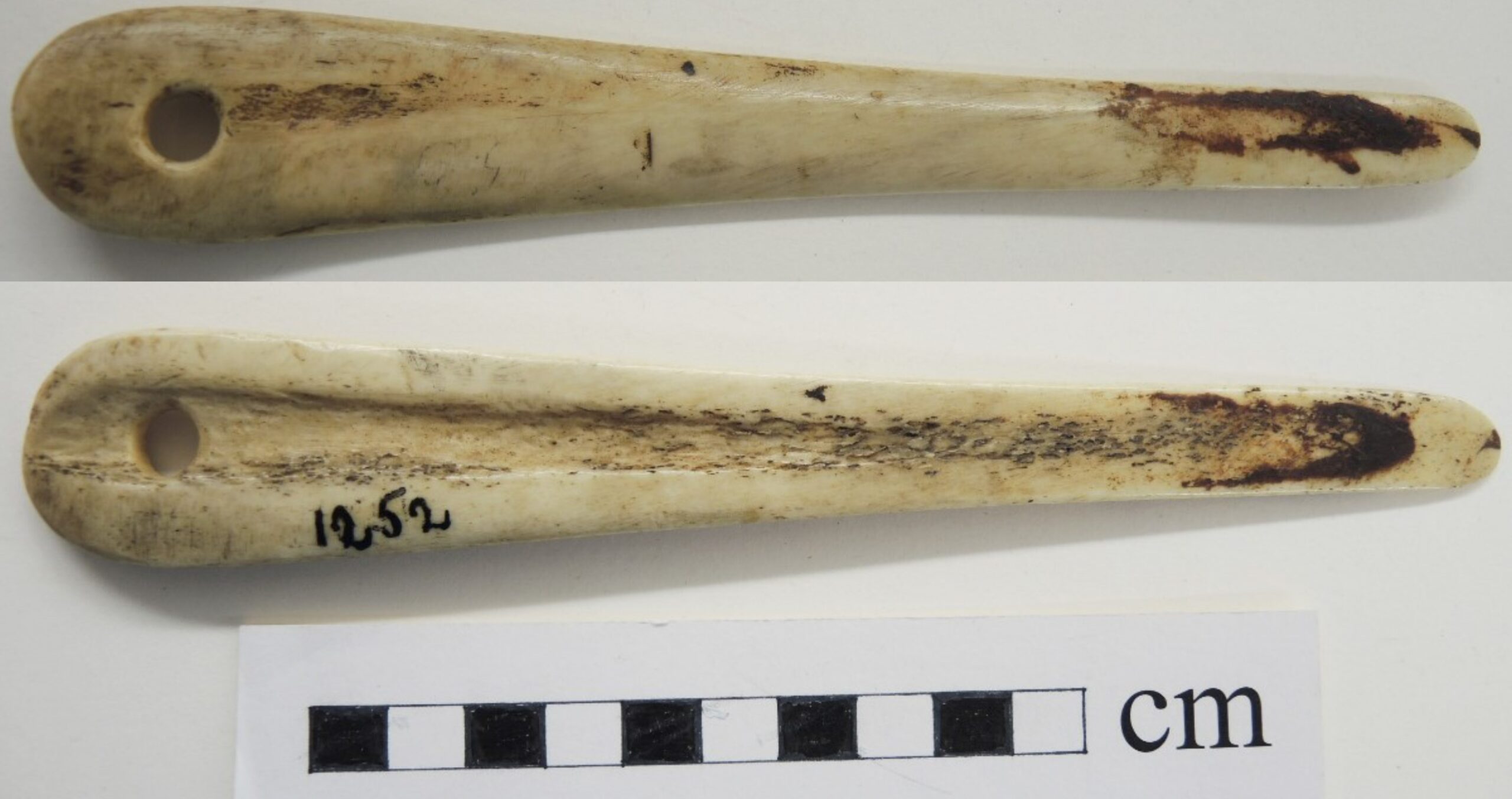
Introduction Many of the artifacts recovered by archaeologists have no ethnographic counterpart in museum collections. Most Indigenous ethnographic artifacts are made of wood. Rarer examples of bone or antler artifacts in ethnographic collections, with documentation, become important to help identify the use of some archaeological artifacts. The Bone Tool One unique artifact, in the Indigenous collections of the Royal B.C. Museum, is a bone tool described as a hat makers’ knife. The example was collected by Kwakwaka’wakw, George Hunt, in 1899, and sold to Charles Newcombe in 1901. Its ethnic origin is identified as Nahwitti, Kwakwaka’wakw. This artifact, number RBCM1252 (old #19074), was listed in the original catalogue by Charles Newcombe as: “Bone knife (Kwetani). Of the mountain goat. Used … Continue reading “A Hat Makers Bone Tool”
Bone Food Strainer Prongs

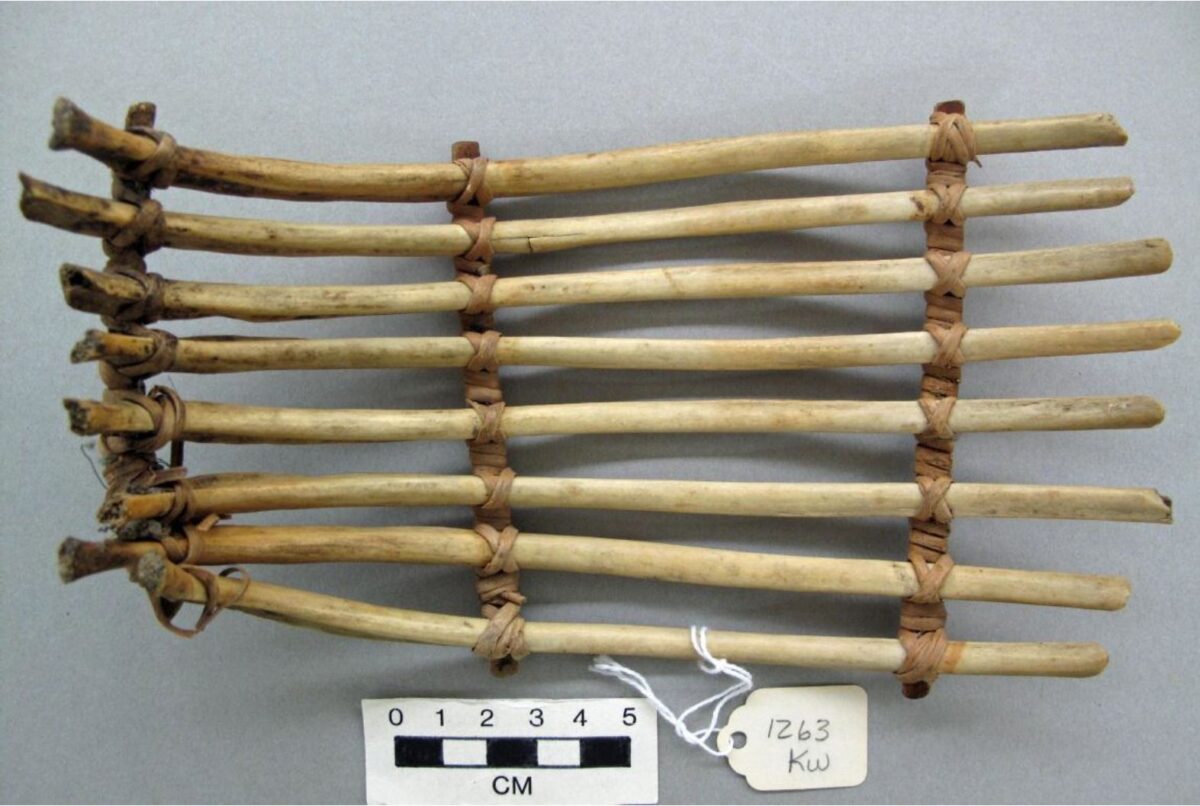
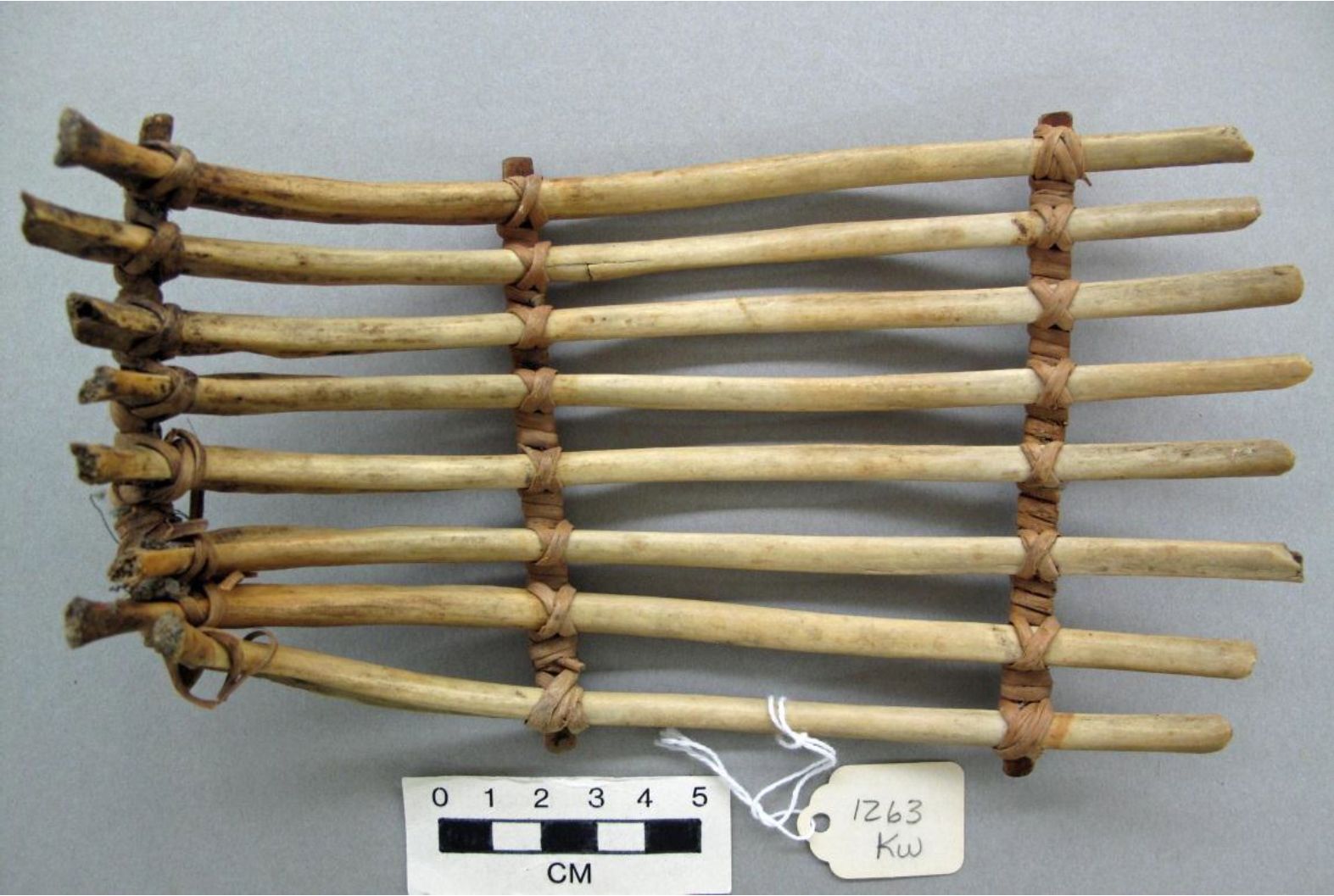
  By Grant Keddie.  2012. Introduction One type of artifact that bridges the gap between archaeology and ethnology in British Columbia are bone food strainer prongs. Archaeologists have often  described these as worked rib artifacts without a suggestion as to what they might be. They are usually made of seal or deer ribs, but some are also of antler. A number of these artifacts share similar characteristics to the prongs of rare food strainers found in ethnology collections.   The ethnographic examples given here are from further north than the archaeological examples shown. However, I suspect that bone food strainers were disused earlier in the historic period in the south and did not get documented by ethnologists or placed in Museum collections. Ethnographic Examples The Royal B.C. Museum ethnology … Continue reading “Bone Food Strainer Prongs”