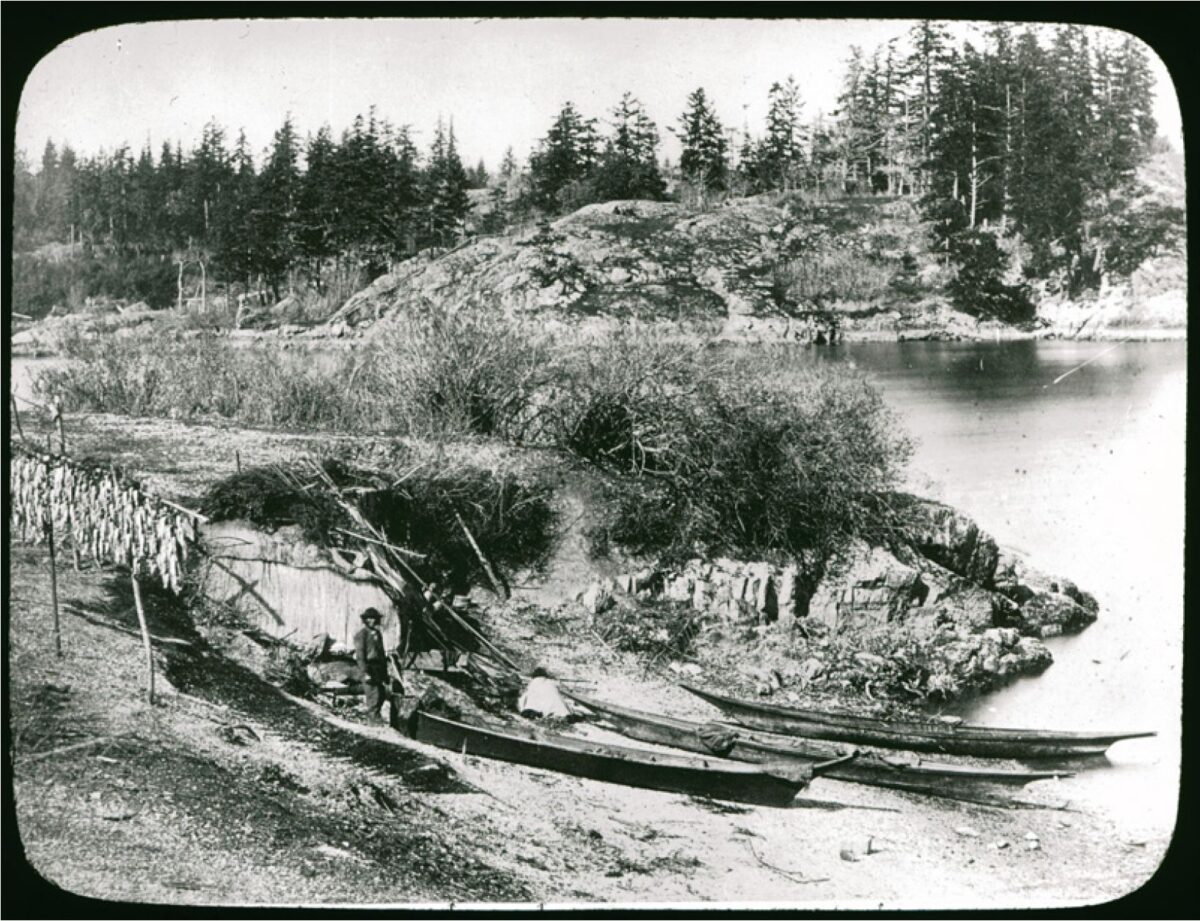
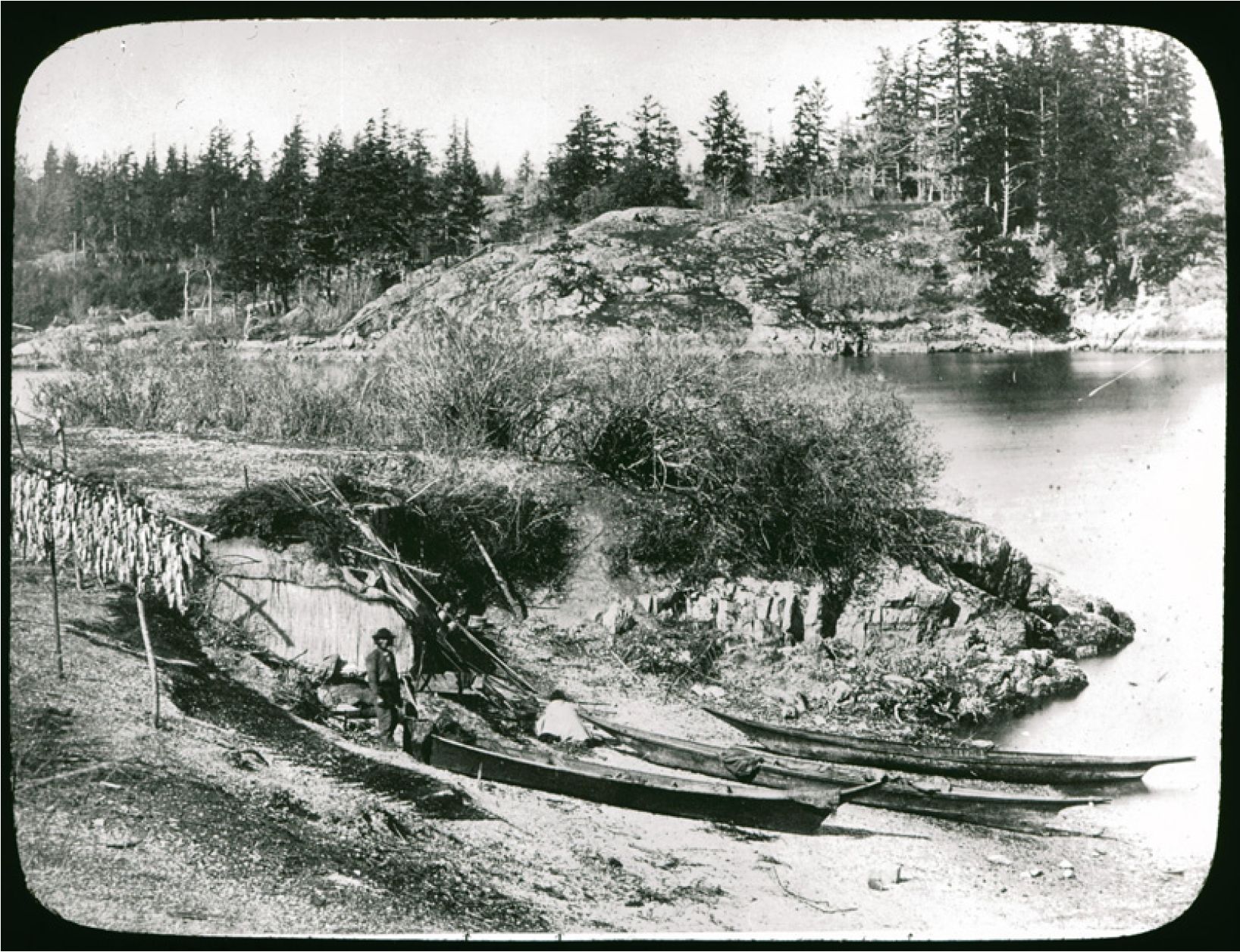
A Lekwungen Herring Fishing site in Esquimalt Harbour: A Unique photograph in the Collection of the Royal B.C. Museum

By Grant Keddie. Nov 2016. 19th century photographic images in the Victoria region that show Lekwungen (Esquimalt and Songhees First Nations) undertaking traditional food gathering practices are rare. The only example of fishing is a photograph, taken in 1868, by Frederick Dally in Esquimalt harbour at the south entrance to Lang Cove (RBCM PN905). Lang Cove is located south of Skinner’s Cove, both of which are within the larger Constance Cove. This is the location of an ancient shellmidden as demonstrated by the scattered white clam shells seen in the image and later observed by the author at this location. This image (fig. 1 and close-up fig.2) of a man and woman at a herring fishing site is listed in … Continue reading “A Lekwungen Herring Fishing site in Esquimalt Harbour: A Unique photograph in the Collection of the Royal B.C. Museum”

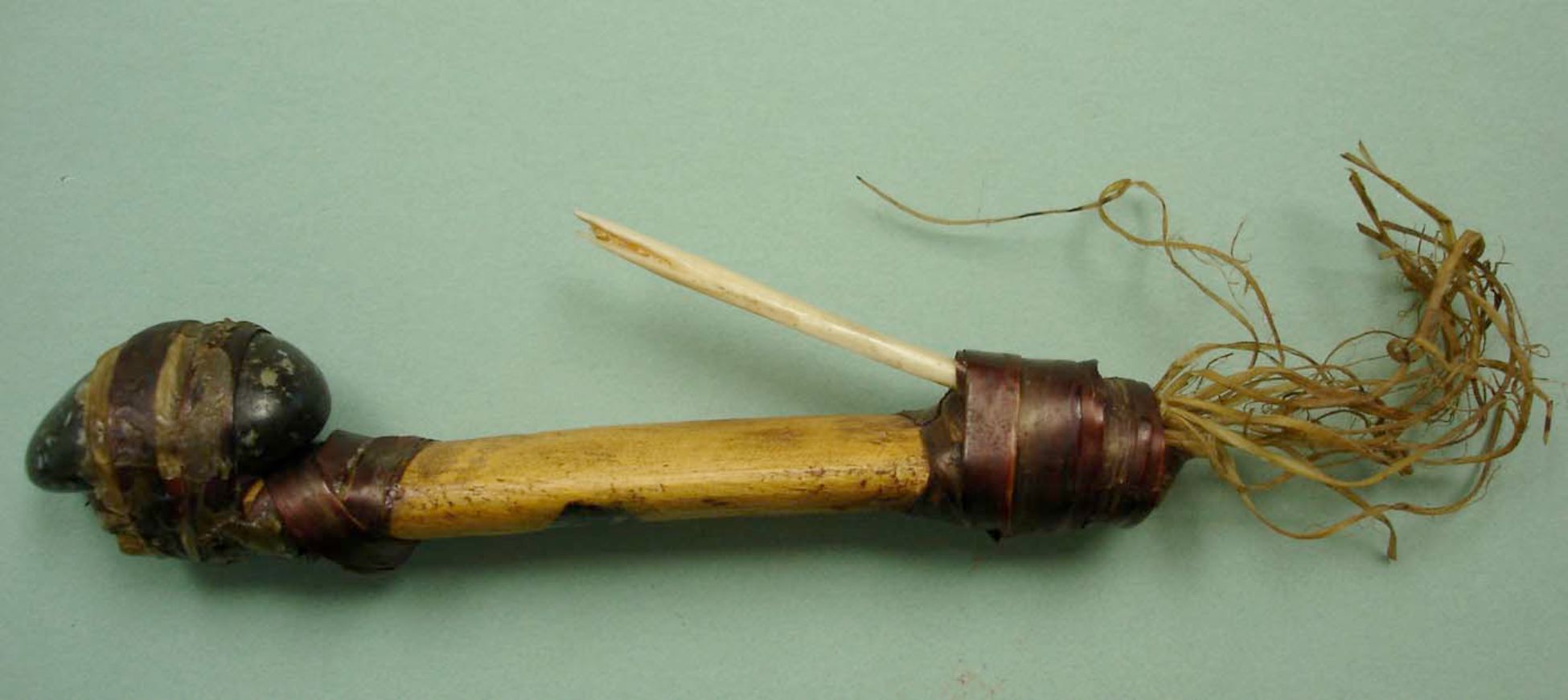
Fish Hook Shanks

2013? By Grant Keddie Fish Hook shanks made of stone, bone, antler and shell are parts of composite fish hooks that are armed with a sharp bone point. These artifacts are often seen as typical “West Coast” of Vancouver Island artifacts. In fact, their distribution extends around the southern end of Vancouver Island, and to a lesser extent, north up the east coast of the Island. The RBCM ethnology collection has only one example of a trolling hook from the Victoria area. This specimen (number 728), however, was not one actually used. It was a model made in 1898, and purchased by Charles Newcombe. The hook was said to represent the kind of trolling hooks that local First Nation used … Continue reading “Fish Hook Shanks”

Hunting the Devil

By Grant Keddie Aboriginal peoples, from the central coast of British Columbia to SW Alaska, represent the octopus in their art, myths and ceremonies. All First Nations peoples living along the coast also ate octopuses, which are high in protein. But while there are many historical accounts of skinned octopus arms being used to bait hooks for halibut fishing, there are few descriptions that have been uncovered about where and how octopuses were caught. Some accounts have been found for the south end of Vancouver Island. In 1951, James Fraser of the Songhees told anthropologist Wilson Duff that the “big rock” in Gonzales Bay was called “devilfish rock” and “If you touch that rock, devilfish come up.” It was also … Continue reading “Hunting the Devil”