Nettle Fibre Beaters in the Collection of the Royal B.C. Museum

There are three wooden artifacts in the RBCM Ethnology Collection known as Nettle Fibre Beaters. Nettle beaters are much lighter than whale bone bark beaters that are designed for pounded larger cedar bark material. (See Keddie 2025; 2024; 2018 and 2016 for related material on Stinging Nettle). The nettle beater, RBCM2071, was purchased May 20, 1914 at Fort Rupert (Port Hardy) by Charles Newcombe. He noted: “Ft. Rupert 20/V/14. Yakuglas” – “Beating stick used in making nettle string found in house rubbish of old foundation”. This was mistakenly labeled on the Museum database as “bark beater”. Later additions to the RBCM database had: Paddle shape nettle beater with design. Kwakwaka’wakw Yellow cedar. Fort Rupert. Tsaxis. RBCN2071 nettle beater is an … Continue reading “Nettle Fibre Beaters in the Collection of the Royal B.C. Museum”
Bullroarers in the Indigenous Collections of the Royal B.C. Museum

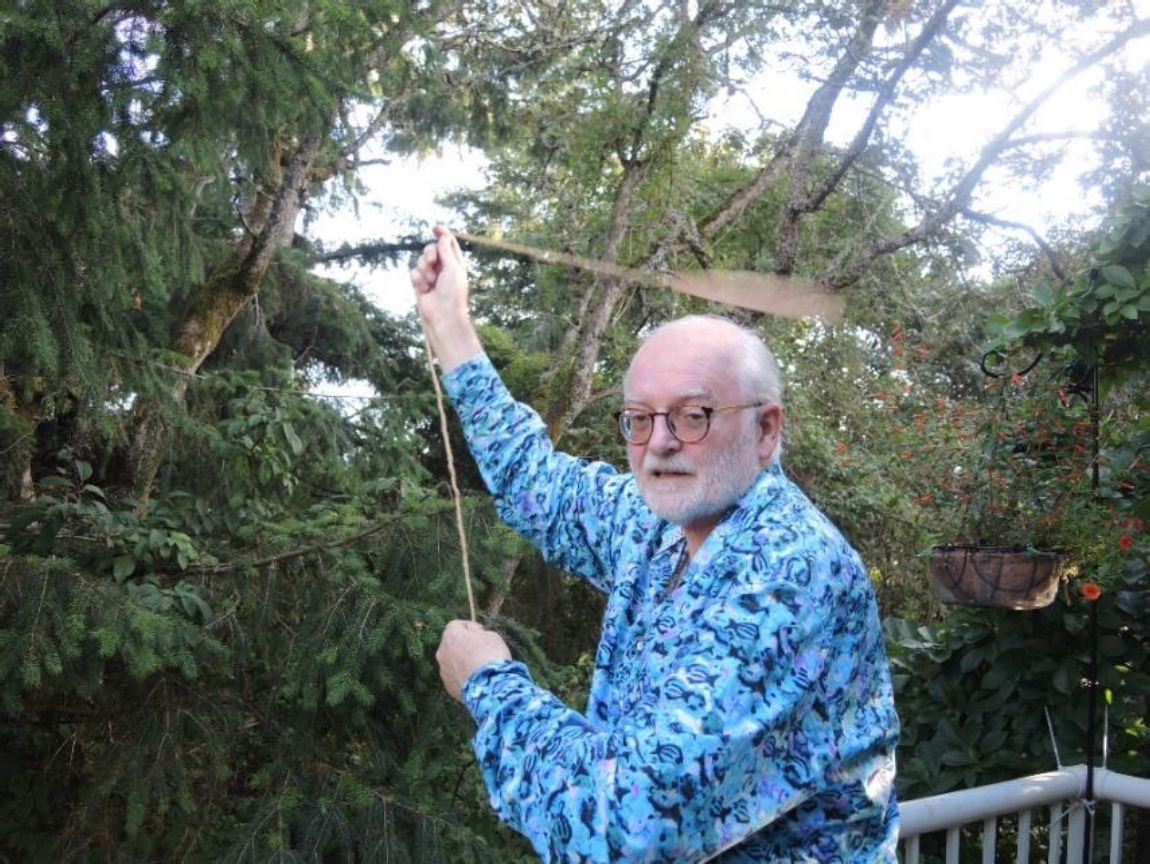
By Grant Keddie. 2020. Introduction The bullroarer is an instrument used by many cultures around the world. It comes in many sizes and dates back at least 20,000 years in Europe. In some parts of my ancestral Scotland the bullroarer was known as a “Thunder­spell” and in Aberdeen as a “Thunder-bolt”. It was used to protect people from being struck by lightning, but in one known case used by a farm boy to scare the cows home (Haddon 1898:222). It is classed as an aerophone musical devise as it is spun in the open air, as opposed to an instrument that is blown into. It involves the use of a piece of flat wood, bone or other material tied to … Continue reading “Bullroarers in the Indigenous Collections of the Royal B.C. Museum”