Pacific Rubber Snake

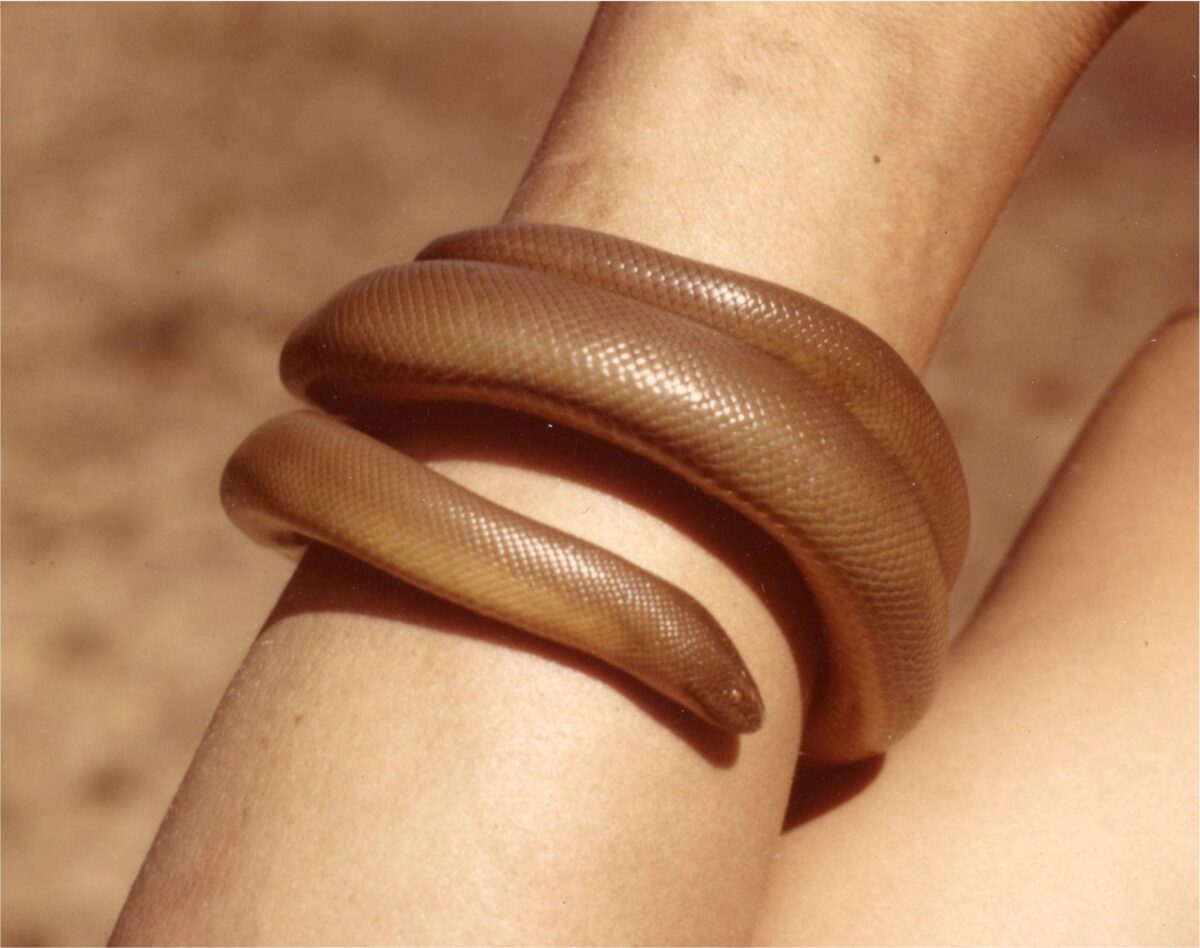
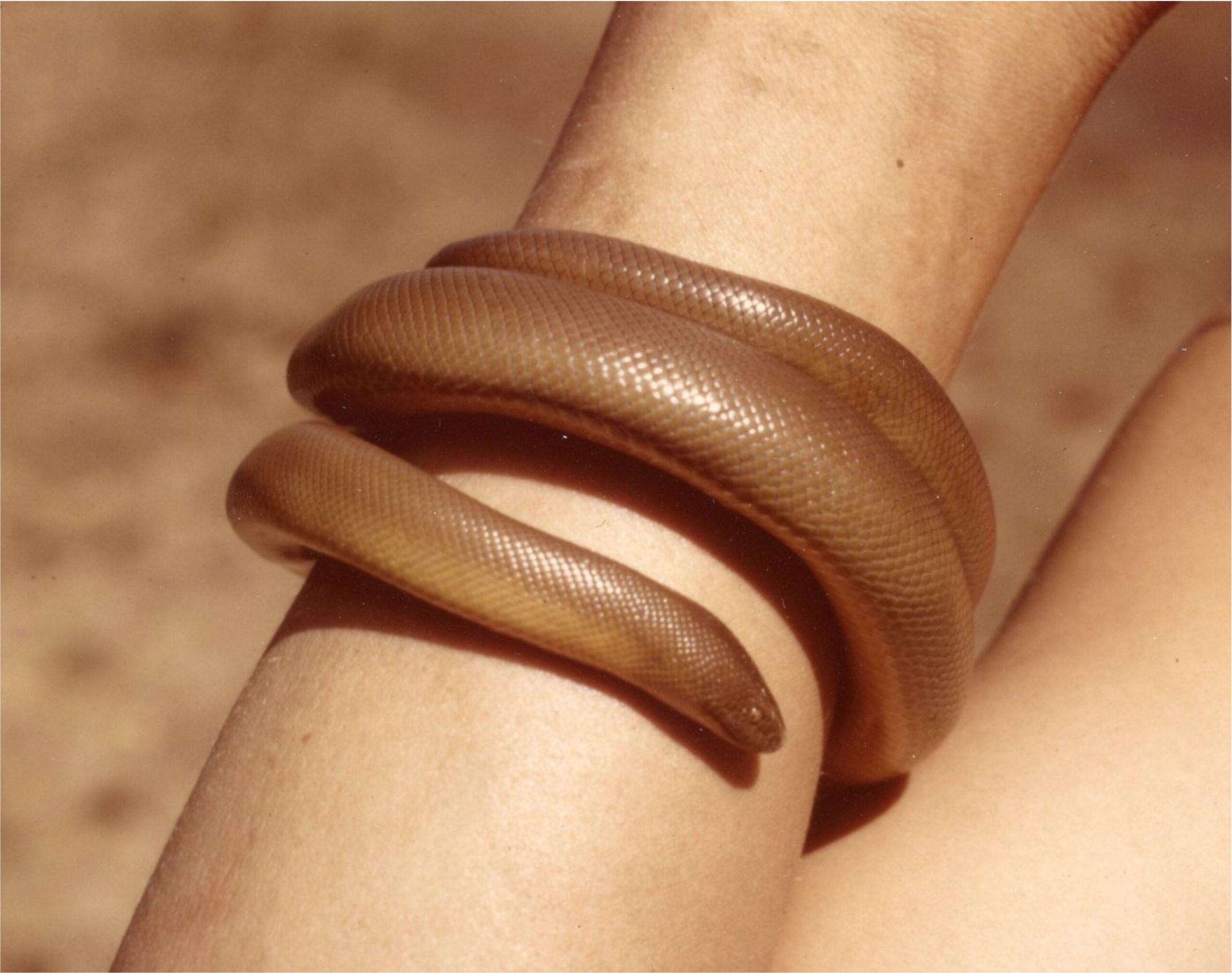
By Grant Keddie. Oct 3, 1974. The Pacific Rubber Snake in the Lower Chilcotin. This article was published in 1975, in the British Columbia Provincial Museum’s publication Syesis. I have added in the original images that were not used in the final publication. I have also added the specific geographical points for the two snake specimens. 51 degrees, 44’ 02” north latitude and 122 degrees, 25’ 30” longitude for the higher elevation specimen and 51 degrees, 44’ 05” North latitude and 122 degrees, 24’, 15” latitude for the lower elevation specimen.   The Pacific Rubber Snake in the Lower Chilcotin During an archaeological and ecological survey of the Lower Chilcotin region in the summer of 1972, two Pacific rubber snakes, Charina … Continue reading “Pacific Rubber Snake”
Bison in British Columbia

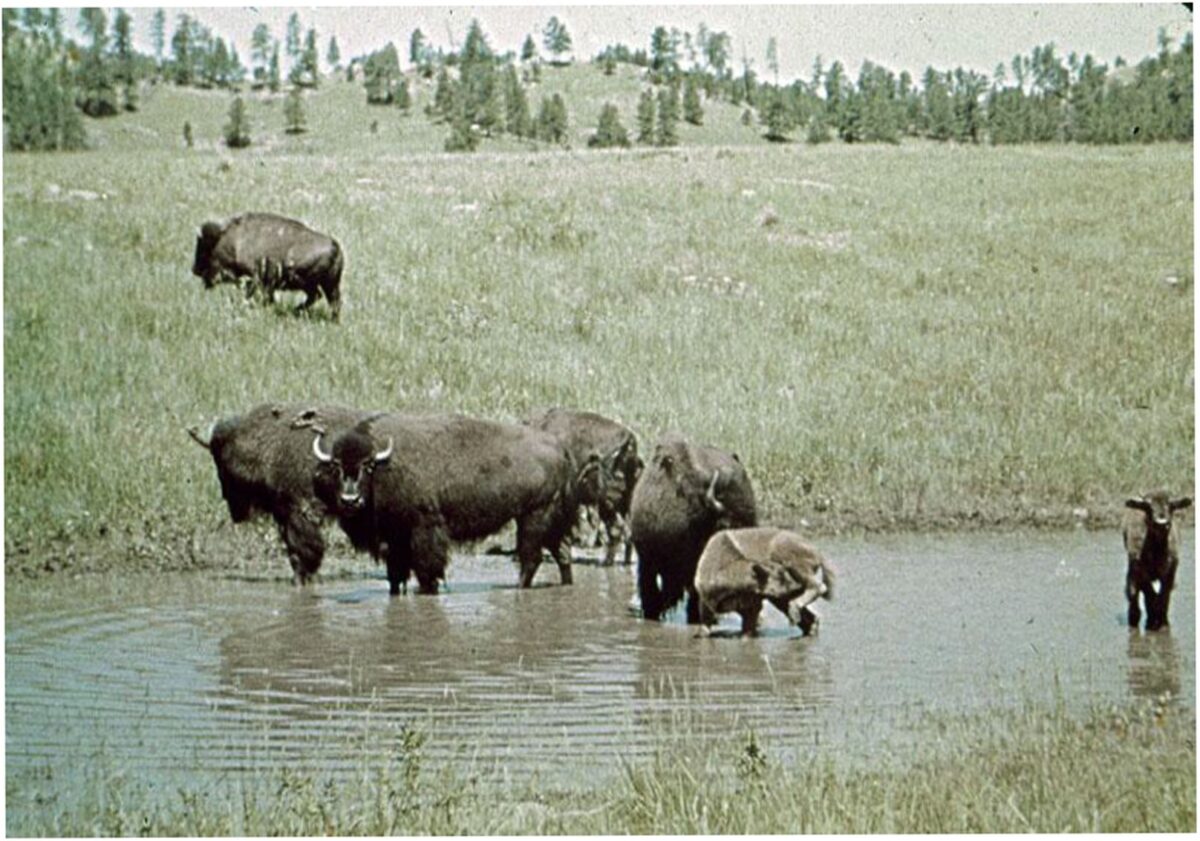
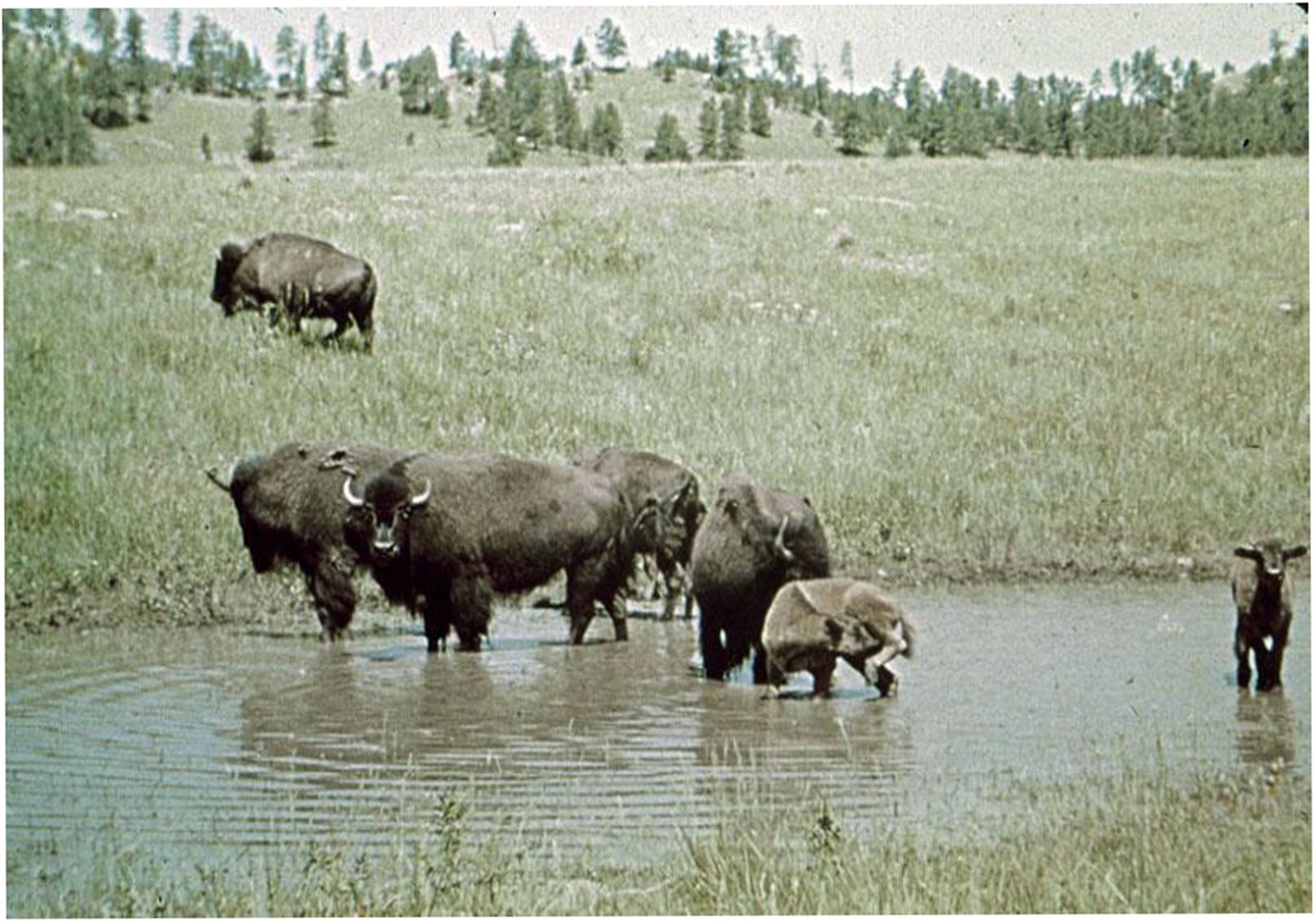
Originally published in Discovery 27(2). 1999. The Loss and Return of Wild Bison. by Grant Keddie   There I sat in the middle of the Bison herd. I was only three years old, but I remember it vividly. Along the Hay River near Great Slave Lake, my father had driven into the herd; we rolled down the windows and stared at these gentle beasts – they looked like a cross between teddy bears and cattle. I maintained my interest by collecting “buffalo head” nickels and dragging home cattle skulls. But the chance to actually work with Bison bones did not come about until I began investigating finds and examining remains brought to the Royal BC Museum (RBCM). Around 1500 AD, … Continue reading “Bison in British Columbia”

Hunting the Devil

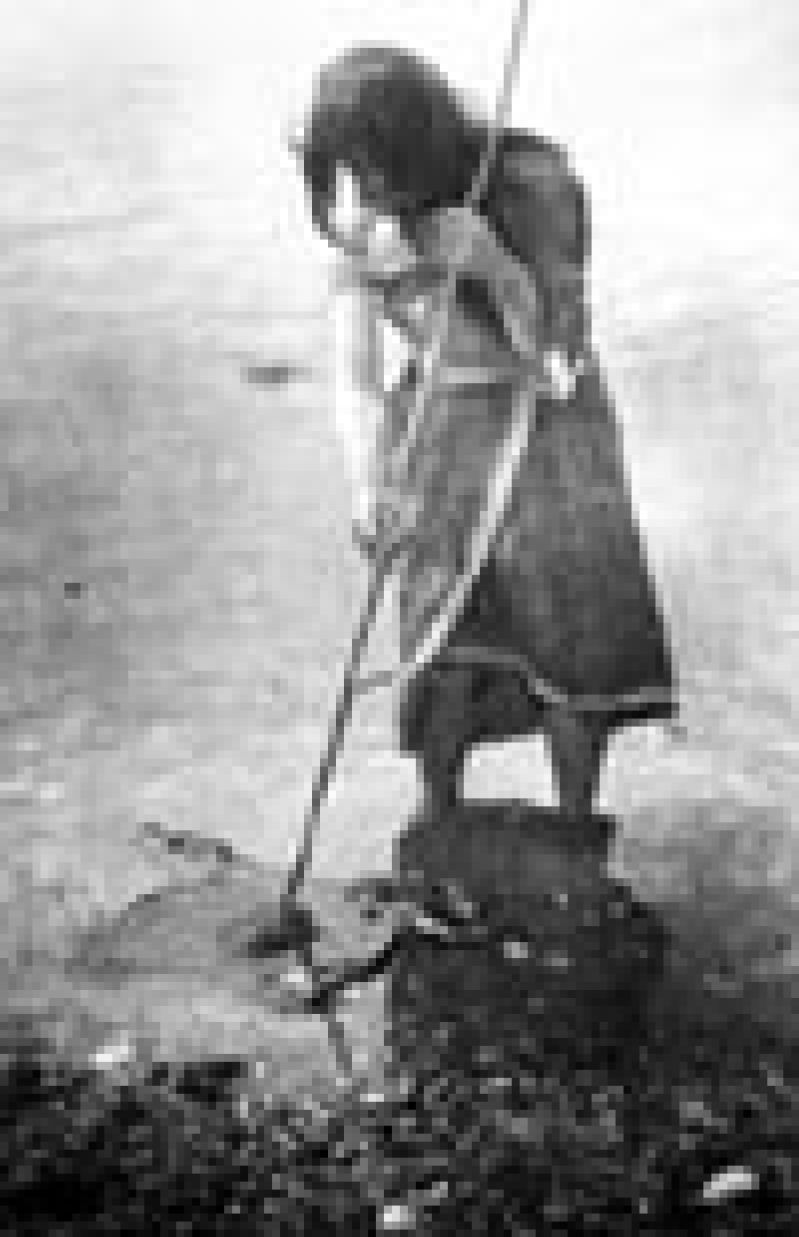
By Grant Keddie Aboriginal peoples, from the central coast of British Columbia to SW Alaska, represent the octopus in their art, myths and ceremonies. All First Nations peoples living along the coast also ate octopuses, which are high in protein. But while there are many historical accounts of skinned octopus arms being used to bait hooks for halibut fishing, there are few descriptions that have been uncovered about where and how octopuses were caught. Some accounts have been found for the south end of Vancouver Island. In 1951, James Fraser of the Songhees told anthropologist Wilson Duff that the “big rock” in Gonzales Bay was called “devilfish rock” and “If you touch that rock, devilfish come up.” It was also … Continue reading “Hunting the Devil”

Wooden Self-Armed Fishhooks from the Salish Sea.

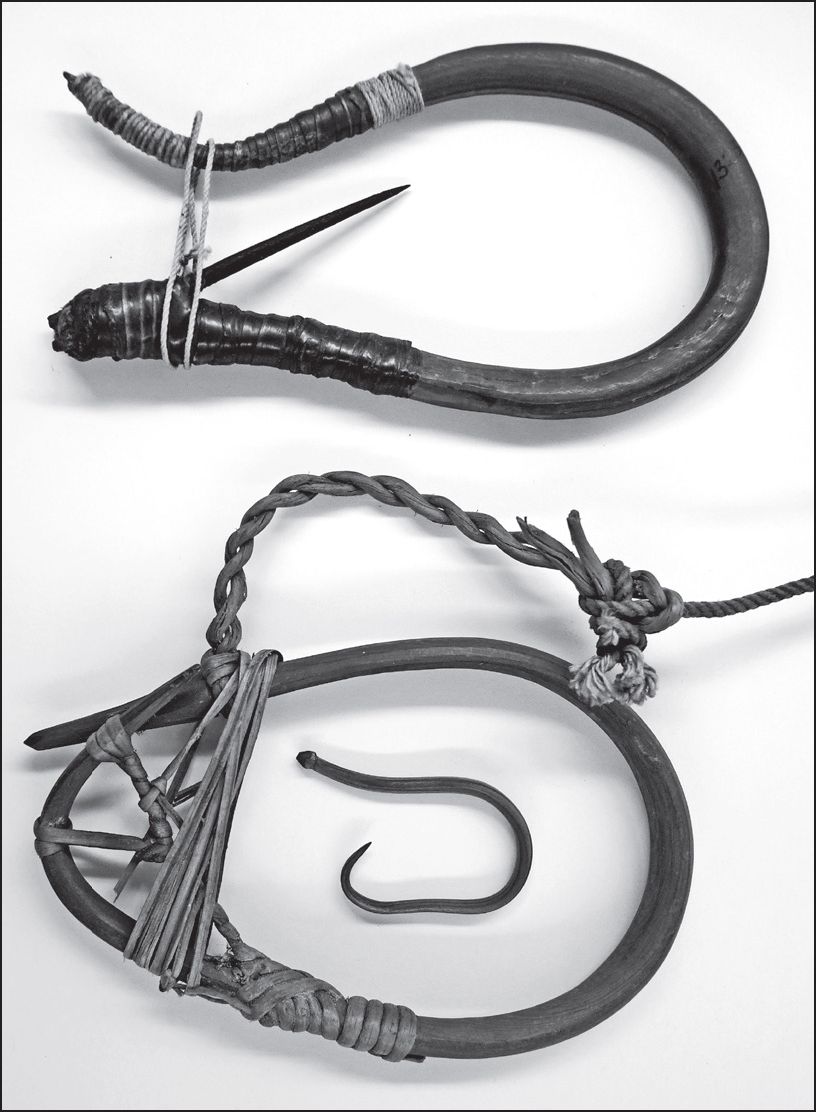
Chapter in Waterlogged: Examples and Procedures for Northwest Coast Archaeologists. Washington State University Press, Pullman, Washington, 2019. Edted by Kathryn N. Bernick. By Grant Keddie Wet sites contain many artifact types that link the archaeological and ethnographic records. Occasionally they also produce objects that do not match the known record. Here, I expand upon our knowledge of one unusual type, the self-armed wooden fishhook, and examine Croes’ (2003:52—55) hypothesis that the technology survived into postcontact times on the northern Northwest Coast but not in the south. This hypoth­esis assumes that self-armed wooden fishhooks were used for catching cod in both regions. However, ethnographic and ethnohistoric evidence for the northern coast indicates that self-armed wood hooks were used to catch sablefish rather than … Continue reading “Wooden Self-Armed Fishhooks from the Salish Sea.”

Wool Dogs of B.C.

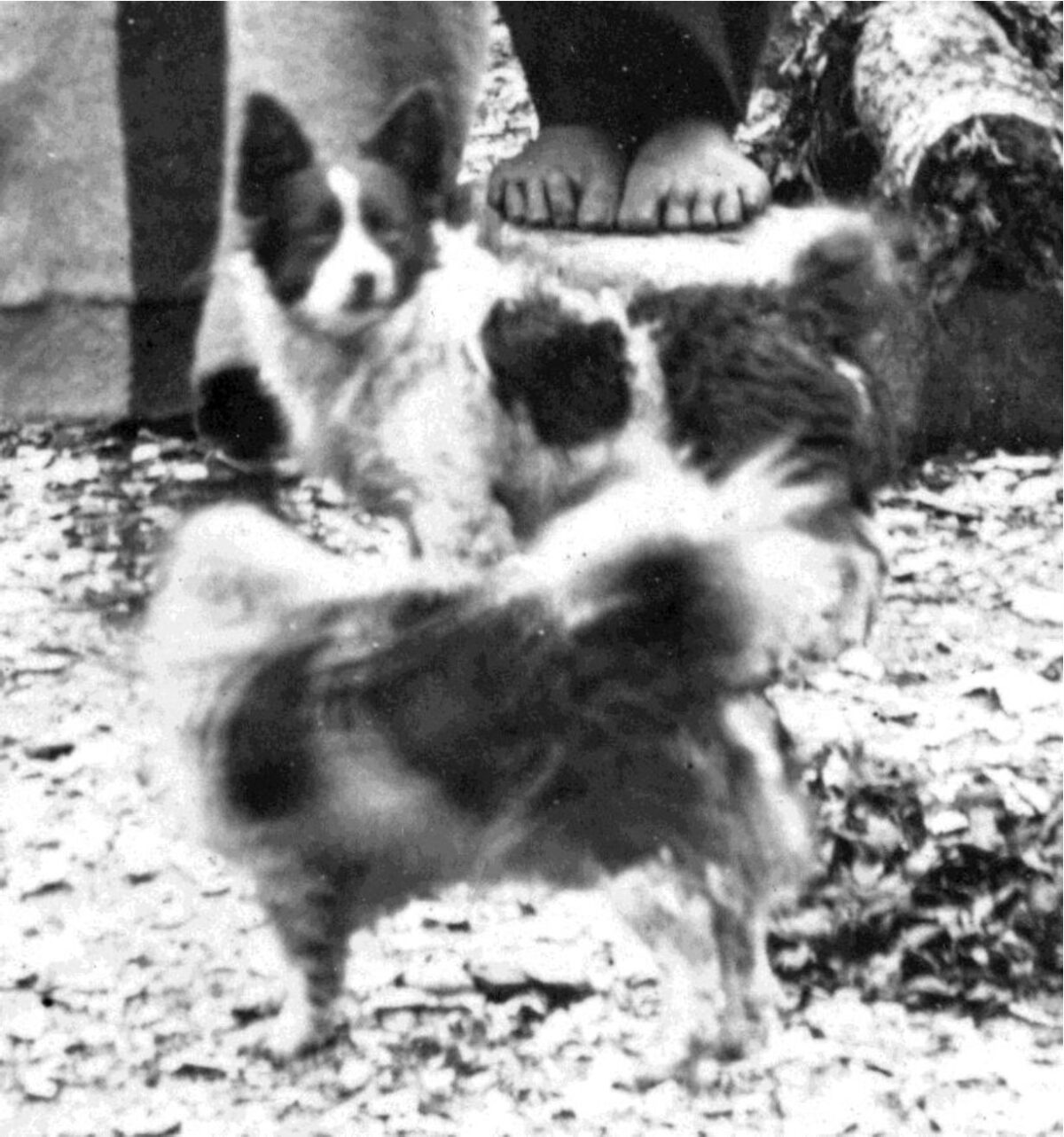
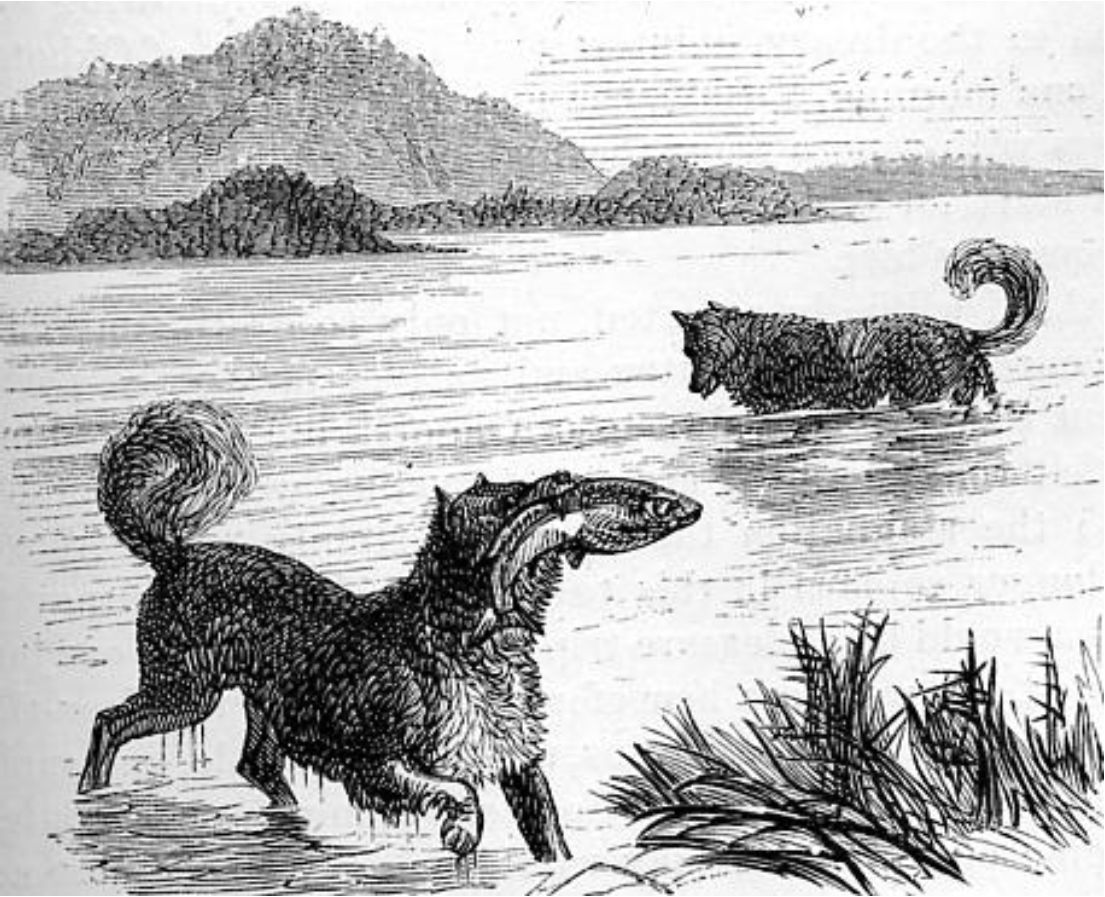
Originally published in The Midden. Publication of the Archaeological Society of British Columbia, 25 (1), 3-5, February 1993. By Grant Keddie Prehistoric Dogs of B.C. Wolves in Sheeps’ Clothing? Throughout the history of North American we see many varieties of native dogs. In British Colombia we find the Bear Dog of the Northern Interior and parts of the northern Coast used for hunting and packing, and a coyote-resembling dog of the southern Interior and Coast used mostly for hunting. On the southern Coast we also find what has become known as the Salish Wool Dog, kept mainly for the production of wool from its thick soft inner coat. With the use of their hair to make of blankets and capes … Continue reading “Wool Dogs of B.C.”

Bird Leg Rings

Bird Leg Rings on the Northwest Coast? By Grant Keddie There are a variety of small artifacts found on the Northwest Coast that are often assumed to be forms of body adornment. Some of these likely had other functions. Three examples described here, might normally be assumed to be pendants. I think we should consider the possibility that these may have been used as bird leg rings for holding live decoy birds or pets. A common type of artifact in Polynesia is the kaka poria or bird leg ring made of stone or whale, bird and human bone. They were used to hold tame kaka birds (Nestor meridionalis) as a decoy for capturing wild birds in the forest (Phillips 1955:145). … Continue reading “Bird Leg Rings”

Dogs of Siberia. Food for Thought on Indigenous dogs of British Columbia.

2022. By Grant Keddie. Introduction Studies on Indigenous dogs and wolfs have greatly expanded in recent years with an emphasis on genetic evolution and isotopic analysis to examine regional differences in food consumption, numbers and other cultural patterns (Fedge et. al. 2021; Peri et. al. 2021; Albizuri et. al. 2021; Ramos-Madrigal et. al. 2021; Coelho et. al. 2021; Feuerborn et. al, 2021; McKechnie et. al. 2020; Frantz et. al. 2020; Bergstrom et, al, 2020; Mikkel-Holger 2020; Hillis et. al. 2020; Harris 2020; Sinding 2020; Ameen et. al. 2019; Leathlobhair et. al. 2018; Losey et. al. 2018 & 2020; Germonpre, Mietje et. al. 2017; Lee et. al. 2015; Shannon et. al. 2015; Ames et. al. 2015; Loftus et. al. 2014; Asch … Continue reading “Dogs of Siberia. Food for Thought on Indigenous dogs of British Columbia.”