Jimmy Fraser the Songhees Story Teller

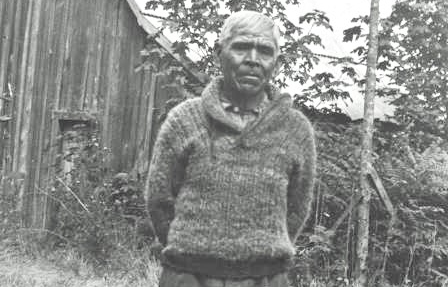
By Grant Keddie. In 1941, World War II was on. At the age of 72, Jimmy Fraser (Kin-Kay-nun; Unthame, Cheachlacth) of the Songhees Nation, stood next to his fellow band members Jack Dick, Roddy Stewart, Art Hall, Clarence Dick, Richard Albany, Dave Fallardeau and Louis Kamai, at the Esquimalt dock yards, famous for their ship building. The Songhees were being praised for their contribution to the war effort. Like so many other Indigenous people then and before in World War 1, they contributed to the Canadian war effort. The Songhees were being singled out for the work they were doing at the dock yards. The foreman at the dockyards said the Songhees “were the best workers he ever had”. (Colonist … Continue reading “Jimmy Fraser the Songhees Story Teller”
Indigenous Combs of British Columbia

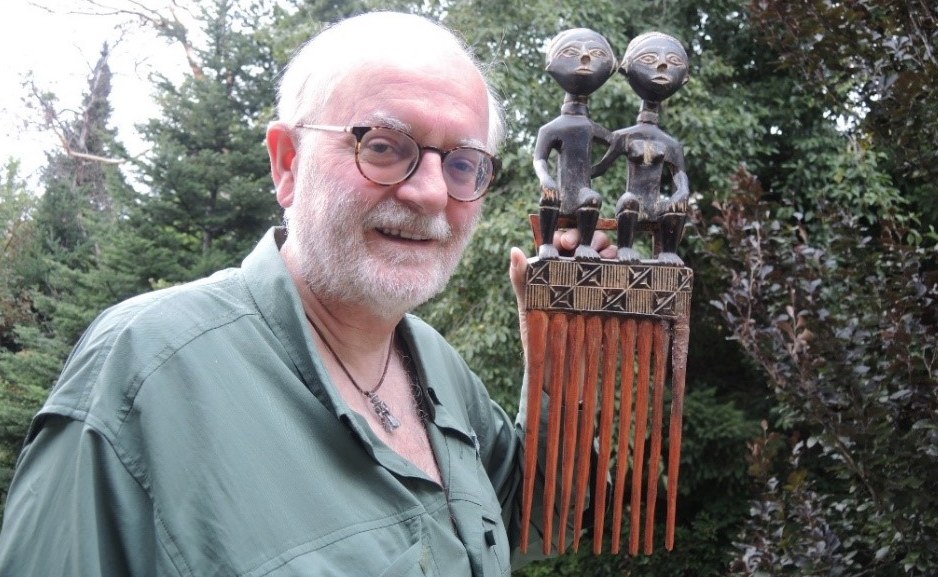
By Grant Keddie. Preface Combs are artifacts used by many cultures around the world over thousands of years. They are used primarily for disentangling and arranging the hair, but also as decorative items for holding the hair and head pieces, they have evolved into symbols of status or authority and cultural identity. To make a point, I show an extreme physical example of an Ashanti comb from Ghana in figure 1. Large Ashanti prestige combs were given by men to women as an act of devotion and commitment. In the 1970s, African combs took on a role in African American culture and politics where they became a sign of solidarity to the Black Power movement as a cultural statement. Combs … Continue reading “Indigenous Combs of British Columbia”

A Lekwungen Herring Fishing site in Esquimalt Harbour: A Unique photograph in the Collection of the Royal B.C. Museum

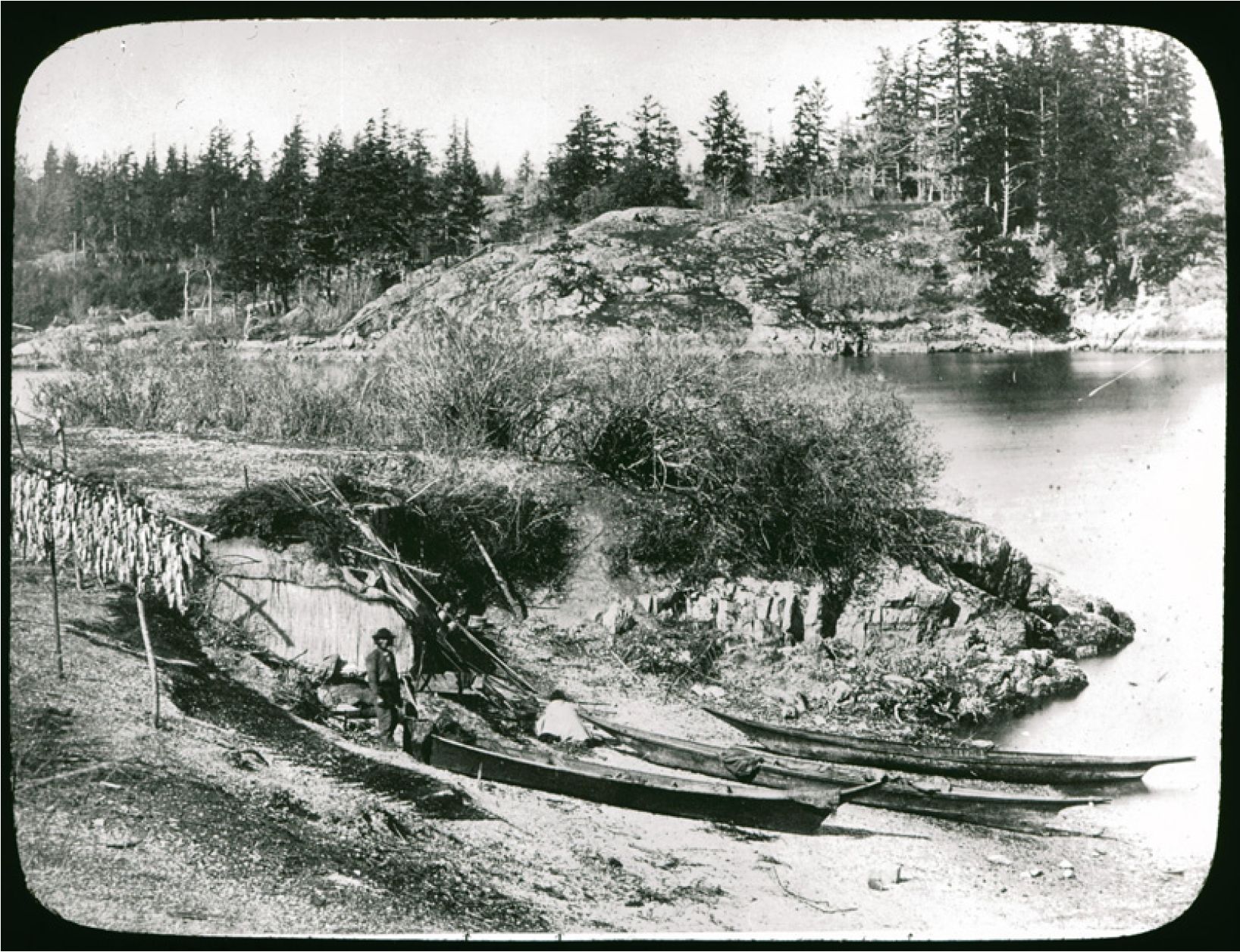
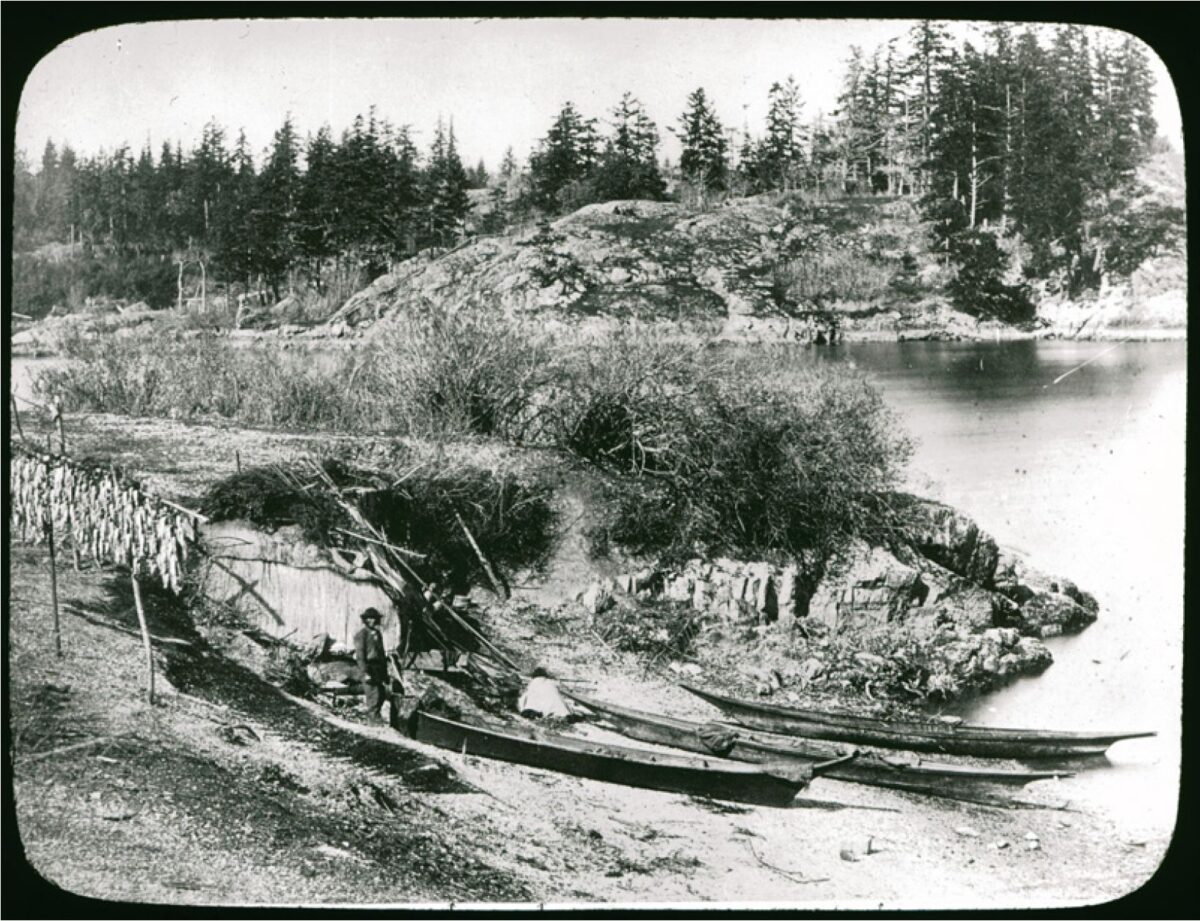
By Grant Keddie. Nov 2016. 19th century photographic images in the Victoria region that show Lekwungen (Esquimalt and Songhees First Nations) undertaking traditional food gathering practices are rare. The only example of fishing is a photograph, taken in 1868, by Frederick Dally in Esquimalt harbour at the south entrance to Lang Cove (RBCM PN905). Lang Cove is located south of Skinner’s Cove, both of which are within the larger Constance Cove. This is the location of an ancient shellmidden as demonstrated by the scattered white clam shells seen in the image and later observed by the author at this location. This image (fig. 1 and close-up fig.2) of a man and woman at a herring fishing site is listed in … Continue reading “A Lekwungen Herring Fishing site in Esquimalt Harbour: A Unique photograph in the Collection of the Royal B.C. Museum”

Lekwungen Resources. Part 1. Fishing

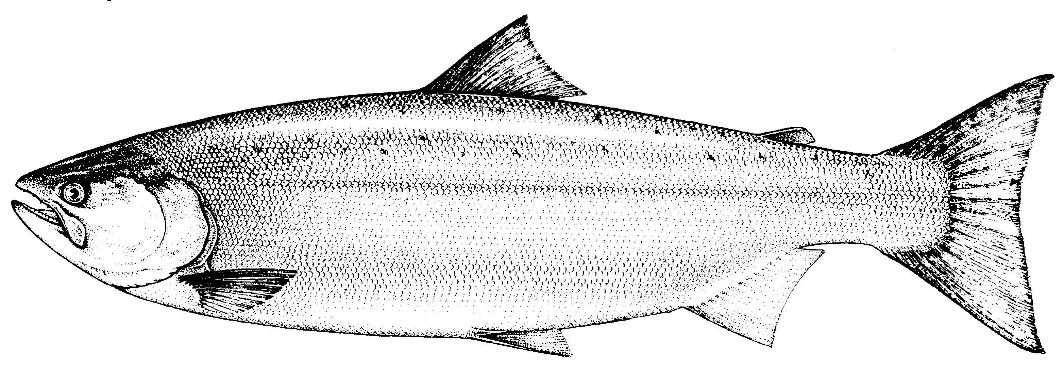
Introduction Fishing was a major part of the traditional Lekwungen economy. The availability of some fish resources, however, changed on a decadal basis because of the changing water temperatures (Chevez et. al. 2003) and the intensity of important seasonal fish runs could vary over longer periods of time due to other climatic factors (Finney et. al. 2000 and 2002). There were times when the salmon runs did not arrive or drought conditions prevented them from running up local streams. People then had to refocus on other resources or starve. Although a few species of fish were often considered the most important, the old village sites reveal the remains of numerous species. Not enough analysis of fish remains from sites has … Continue reading “Lekwungen Resources. Part 1. Fishing”

Pallatsis. A Special Place in Lekwungen Tradition

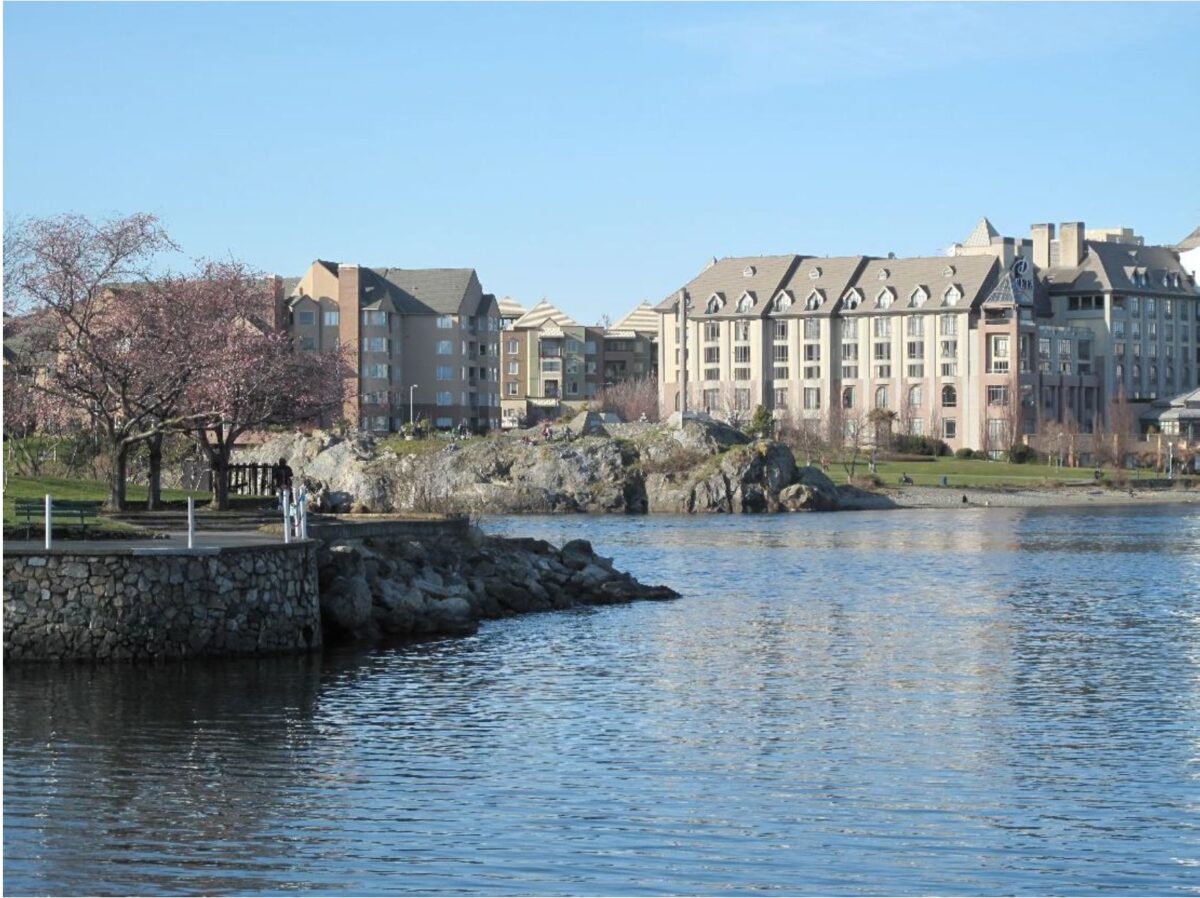
By Grant Keddie. For the Indigenous Lekwungen of greater Victoria there are two special places associated with the acquiring of spirit power. One is at the Gorge waterfalls under the Tillicum bridge and one here in the downtown core of Victoria. This is the location of Songhees Point – the rocks sticking out into Victoria Harbour across from Laurel Point. Pallatsis (p’alac’as) “place of cradle” is the name given by Songhees Sophie Micheal and Ned Williams for Songhees Point In traditional culture the natural and supernatural worlds are inseparable; each is intrinsically a part of the other. Pallatsis, was a sacred place where people deposited the cradles of children who had reached the walking stage and put there to ensure … Continue reading “Pallatsis. A Special Place in Lekwungen Tradition”

Spindle Whorls in British Columbia Part 4. Thunderbird and Lightening Snake Iconography

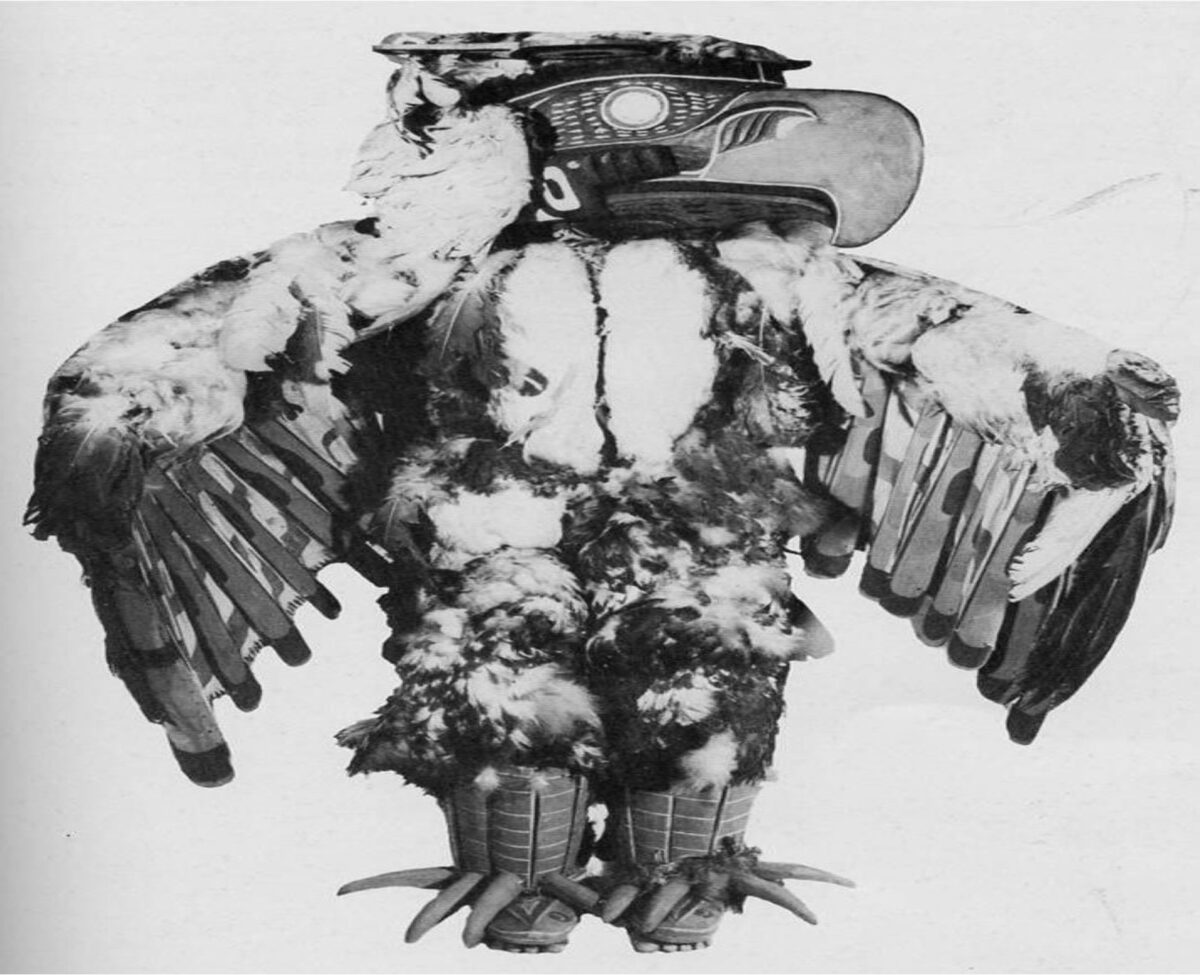
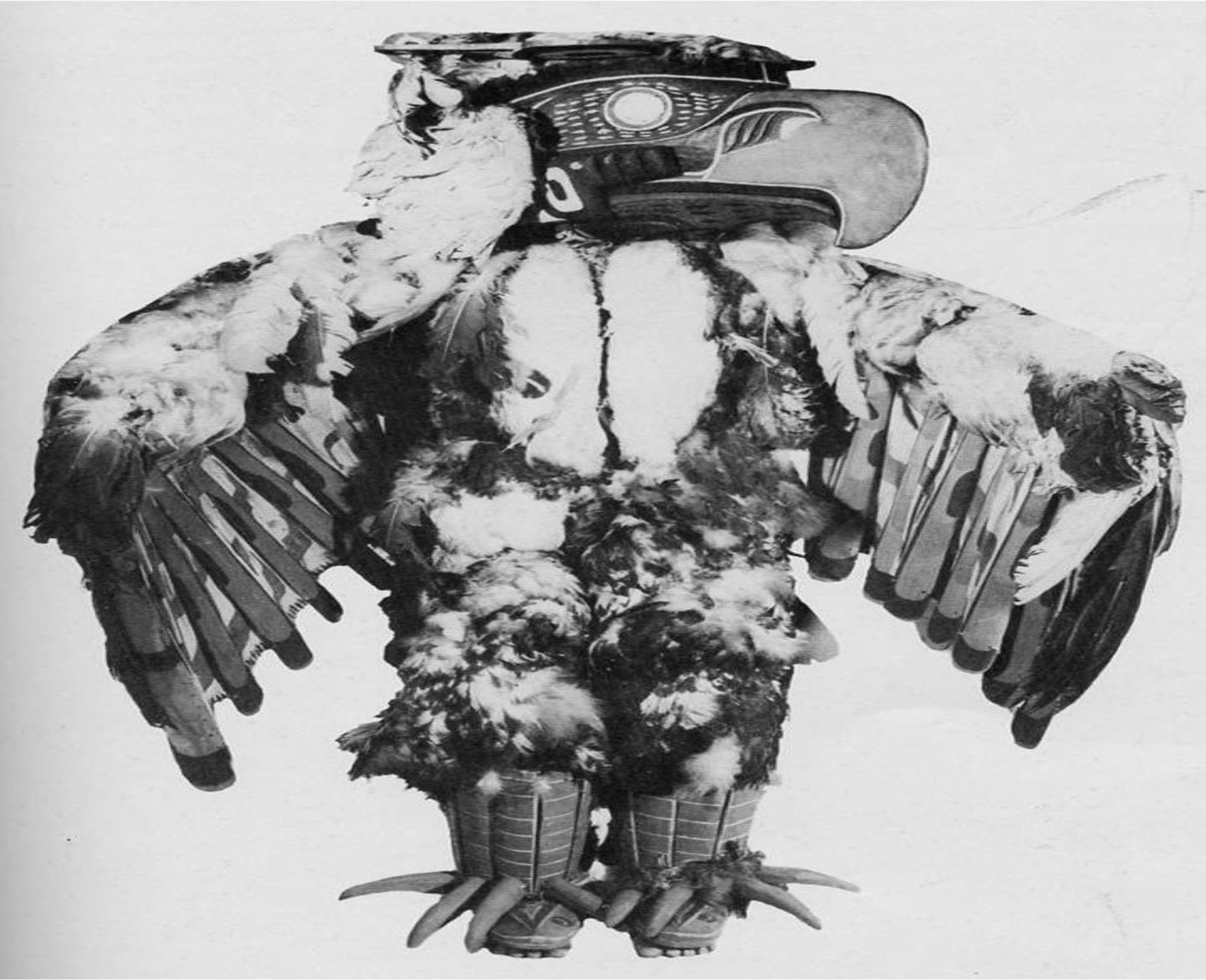
By Grant Keddie. March 2023. Introduction The rigid distinction between culture and nature in historic western societies did not exist in Indigenous cultures. Animals were not just sources of food and raw materials but intelligent sentient beings as conscious and capable of understanding as humans and as capable in undertaking planned intentional activities. Symbolic presentations of animals or supernatural beings in both material artifacts and mythology, such as Thunderbird in his various transformations, are about relationships between what we see as the social world and natural world. In the indigenous cosmologies beings such as Thunderbird play a role as active participants in ecological relationships. Anthropologist Franz Boas felt that myth adjusts to the world and that it supports existing institutions … Continue reading “Spindle Whorls in British Columbia Part 4. Thunderbird and Lightening Snake Iconography”

Spindle Whorls of British Columbia Part 3. Large Historic Spindle Whorls in the Indigenous Collection of the Royal B.C. Museum.

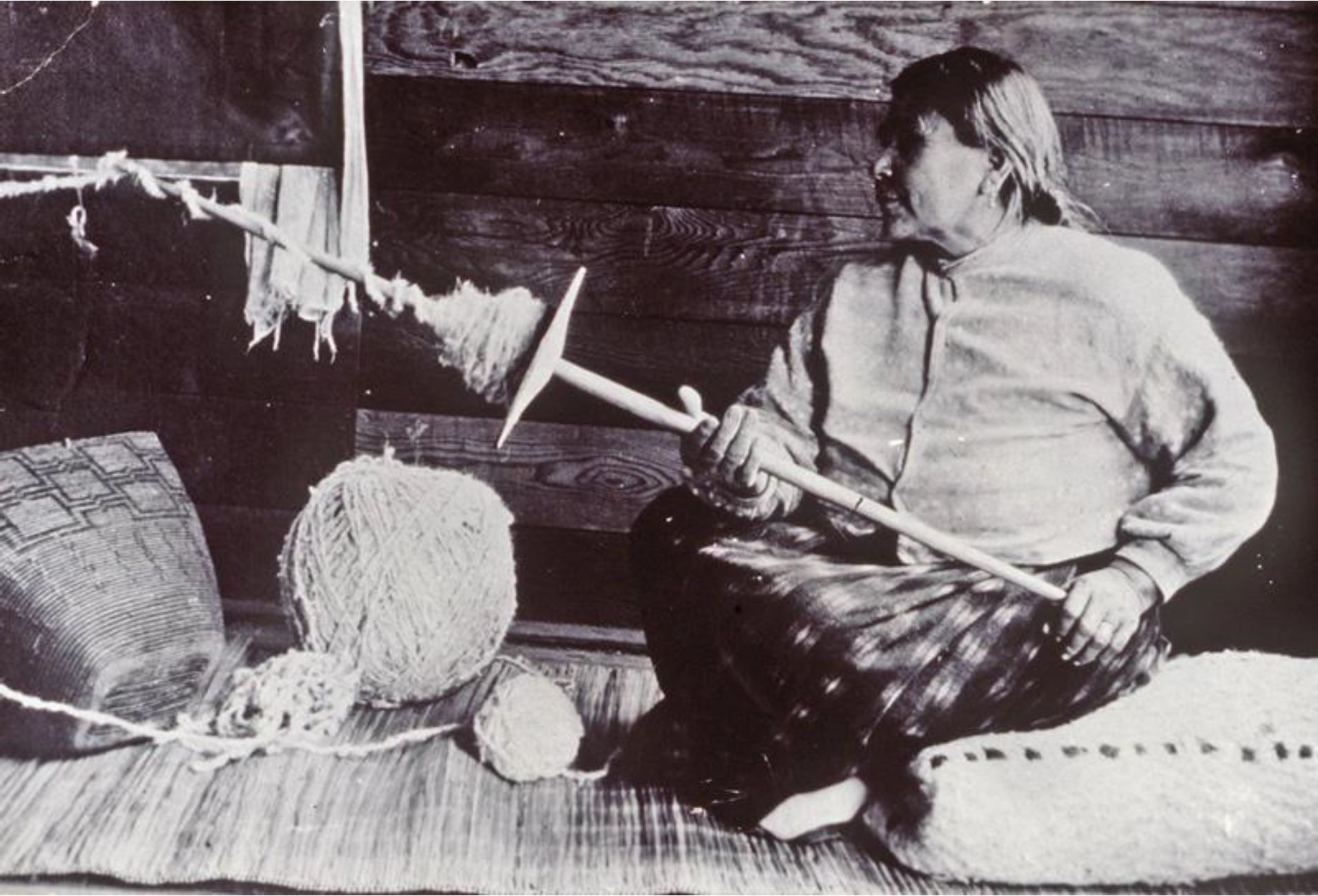
By Grant Keddie. March 2023. [Part 4 in this series on Spindle Whorls in British Columbia will deal with the Thunderbird and Lightening Snake Iconography most relevant to Part 3] Introduction Large wooden spindle whorls from the historic post contact period were used primarily for twisting together two already twisted strands of fibre. The fibre consisting mostly of hair of mountain goat, domestic dogs, seal and other mammals as well as bird down and plant material such as the plume of the fireweed. Description of the Large Whorls in the Ethnology Collection There are 30 large spindles whorls in the Royal B.C. Museum Ethnology Collection. The term ethnology is used here to refer to non-archaeological artifacts in the Indigenous collections. … Continue reading “Spindle Whorls of British Columbia Part 3. Large Historic Spindle Whorls in the Indigenous Collection of the Royal B.C. Museum.”

Spindle Whorls of British Columbia: Part 2

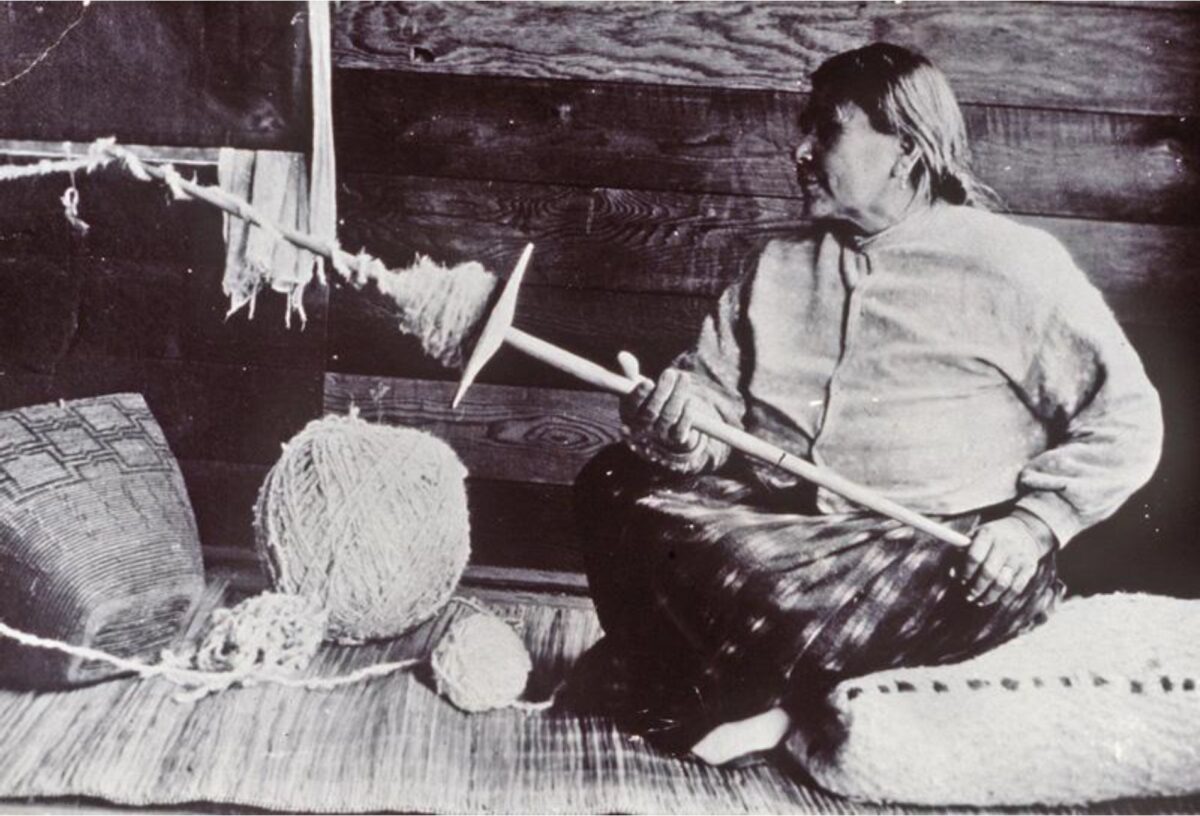
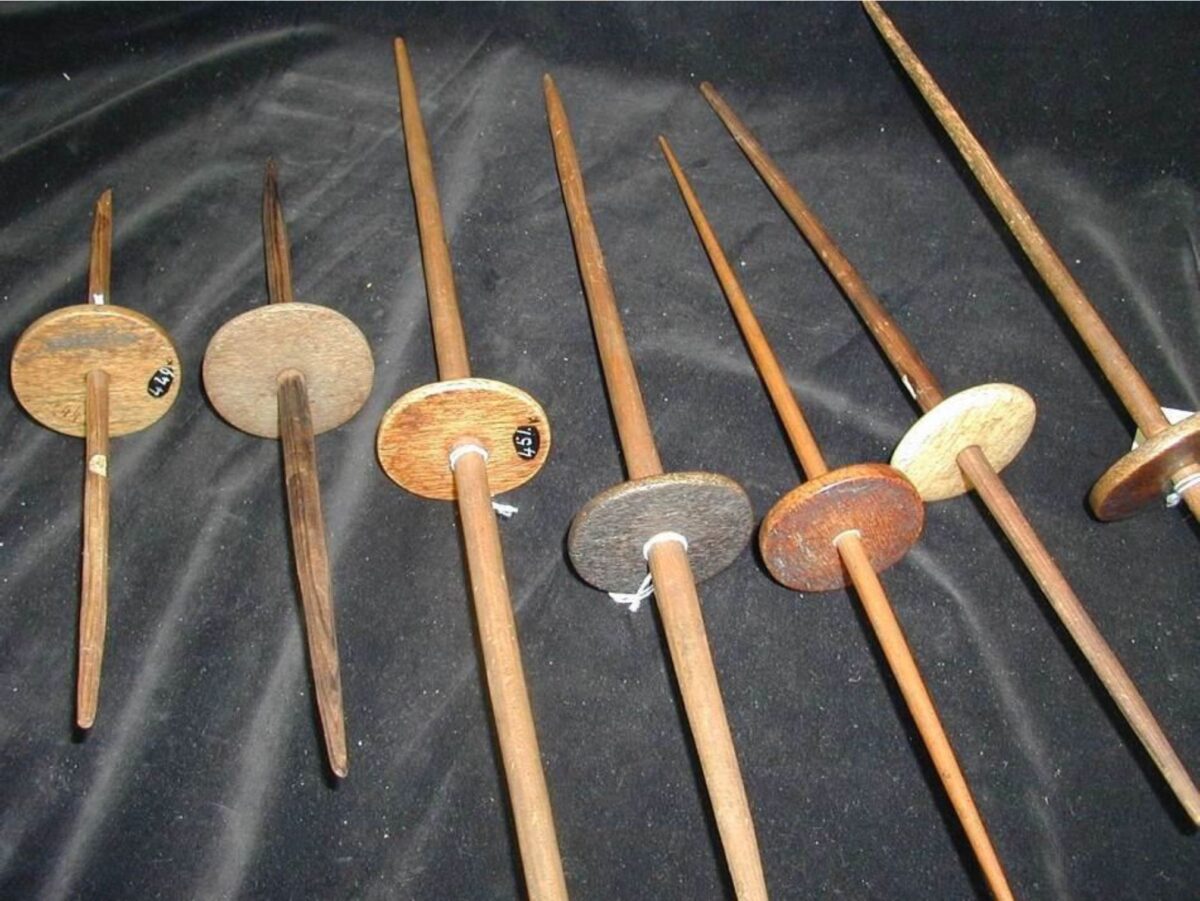
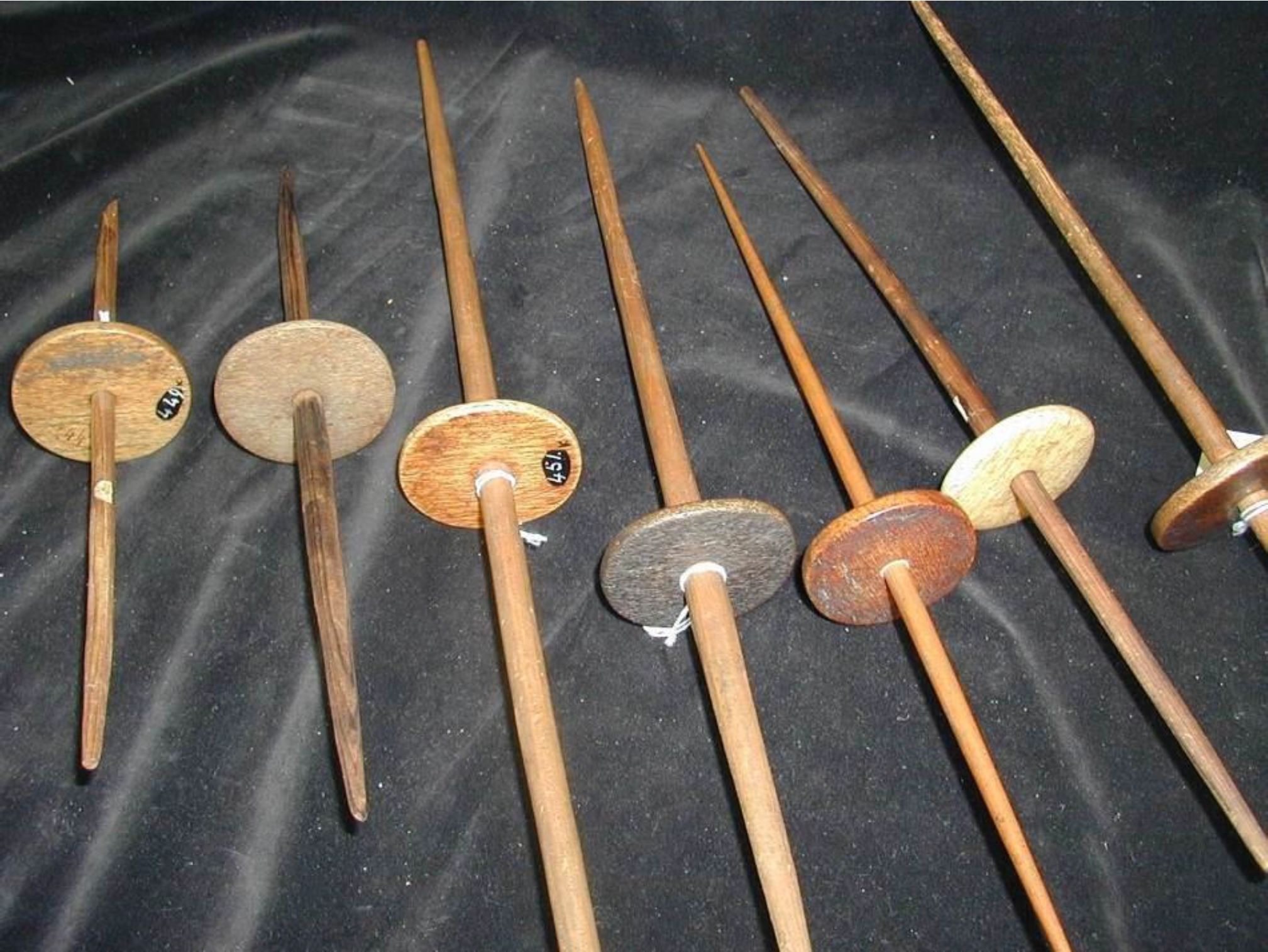
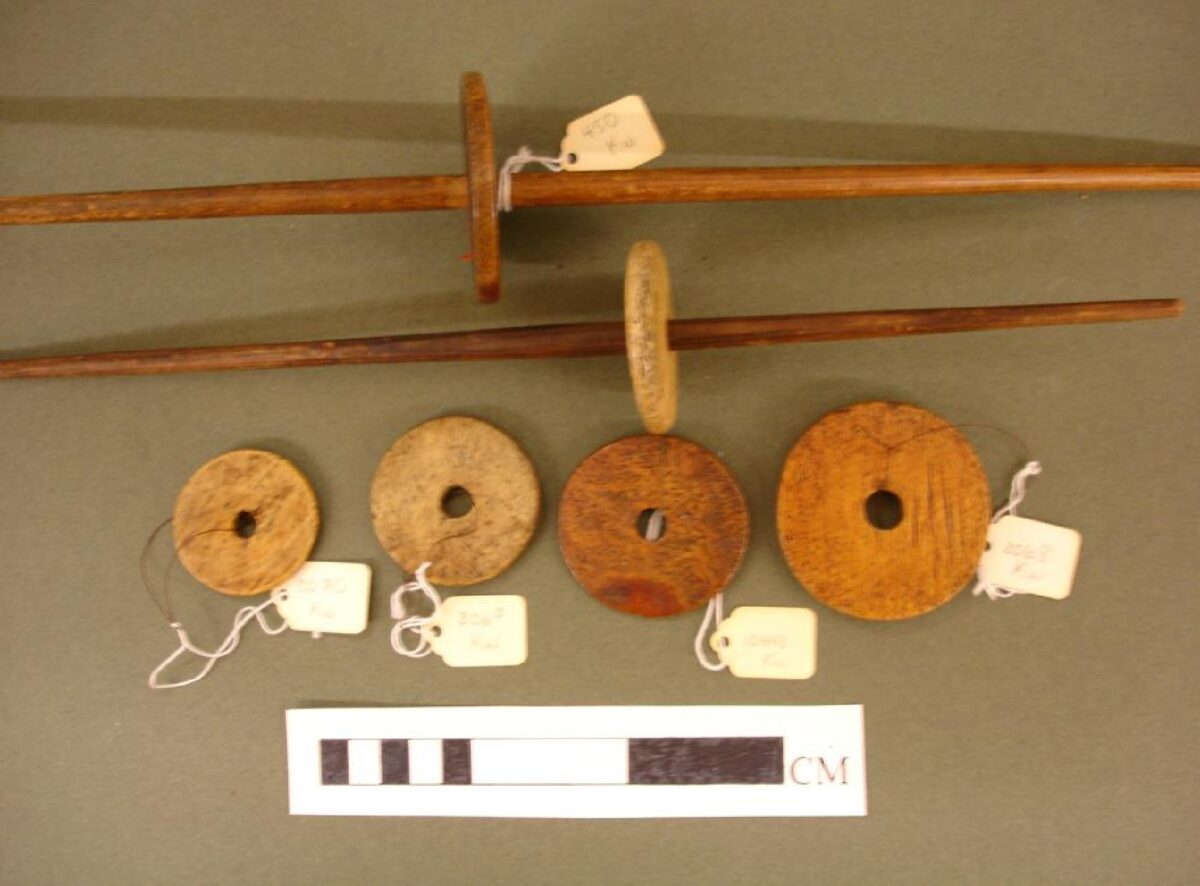
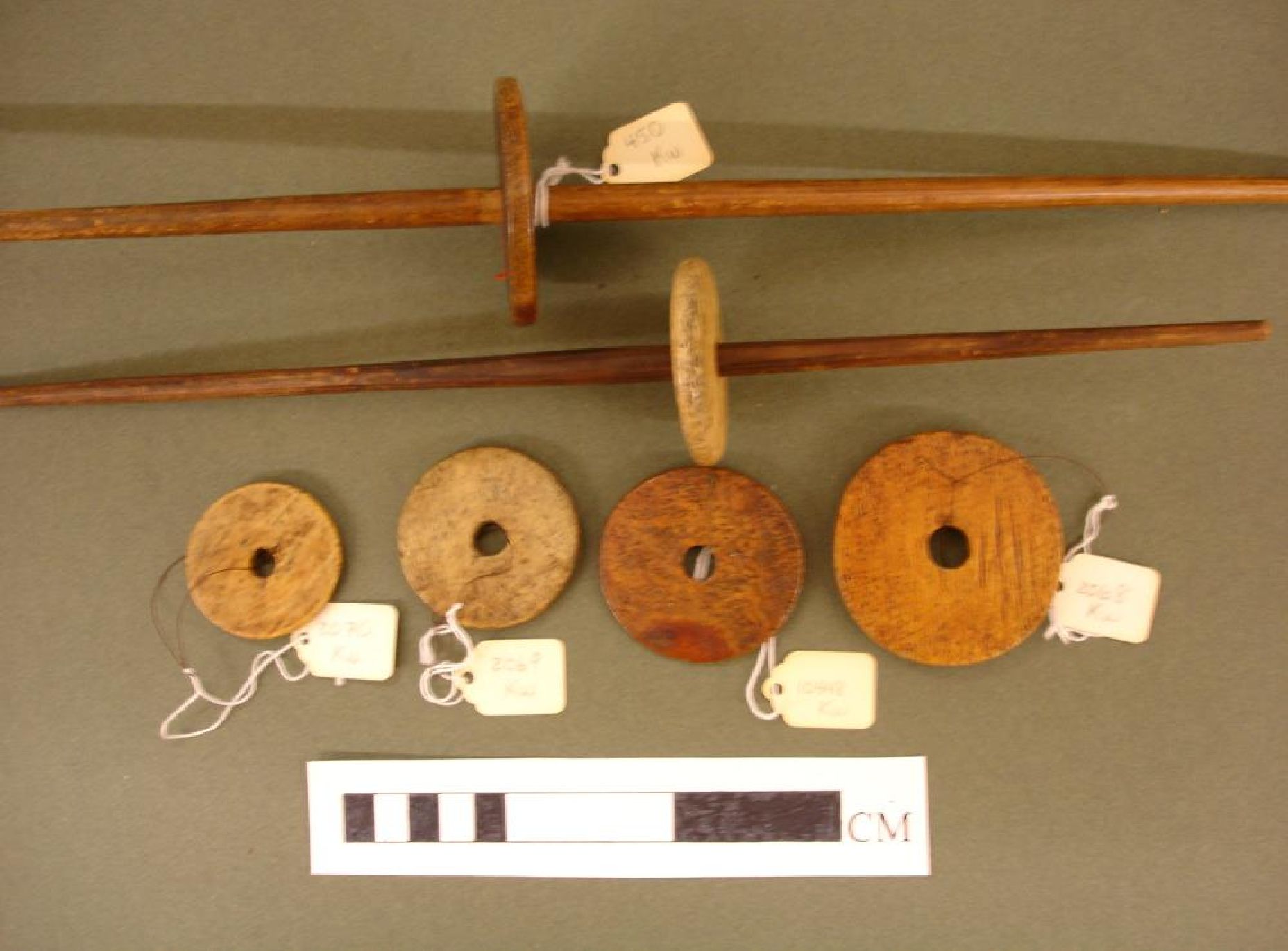
October 11,2018. By Grant Keddie. Small Spindle Whorls in the Ethnology Collection of the Royal BC Museum Much of the attention in the literature has focused on the large spindle whorls used by speakers of languages in the Salish linguistic family on the south-eastern coast of British Columbia. In the 19th and early 20th centuries, small spindle whorls were found among peoples belonging to several of the larger linguistic families. The lack of iconography on most of these smaller spindles likely contributed to their being of less concern to researchers than the study of the larger whorls – many of which have geometric, anthropomorphic or zoomorphic design patterns. The resurgence of indigenous weaving with the use of large spindle whorls … Continue reading “Spindle Whorls of British Columbia: Part 2”

Spindle Whorls in British Columbia. Part 1.

December 6, 2016. By Grant Keddie. Introduction and Spindle Whorls in the Archaeology Collection of the Royal BC Museum Introduction In order to provide a broader understanding of the earlier history and origins of both historic and pre-contact spindle whorls used in British Columbia, I will provide a description with images of all the spindle whorls in the Archaeology and Ethnology collection of the Royal B.C. Museum. This will be presented in three Parts: (1) Introduction and Spindle Whorls in the Archaeology Collection of the Royal BC Museum. (2) Small Spindle Whorls in the Ethnology Collection of the Royal BC Museum. (3) Large Spindle whorls from speakers of the Salish language family in the Ethnology Collection of the Royal BC … Continue reading “Spindle Whorls in British Columbia. Part 1.”

The Archaeology and Ethnology of Wedges on the Northwest Coast

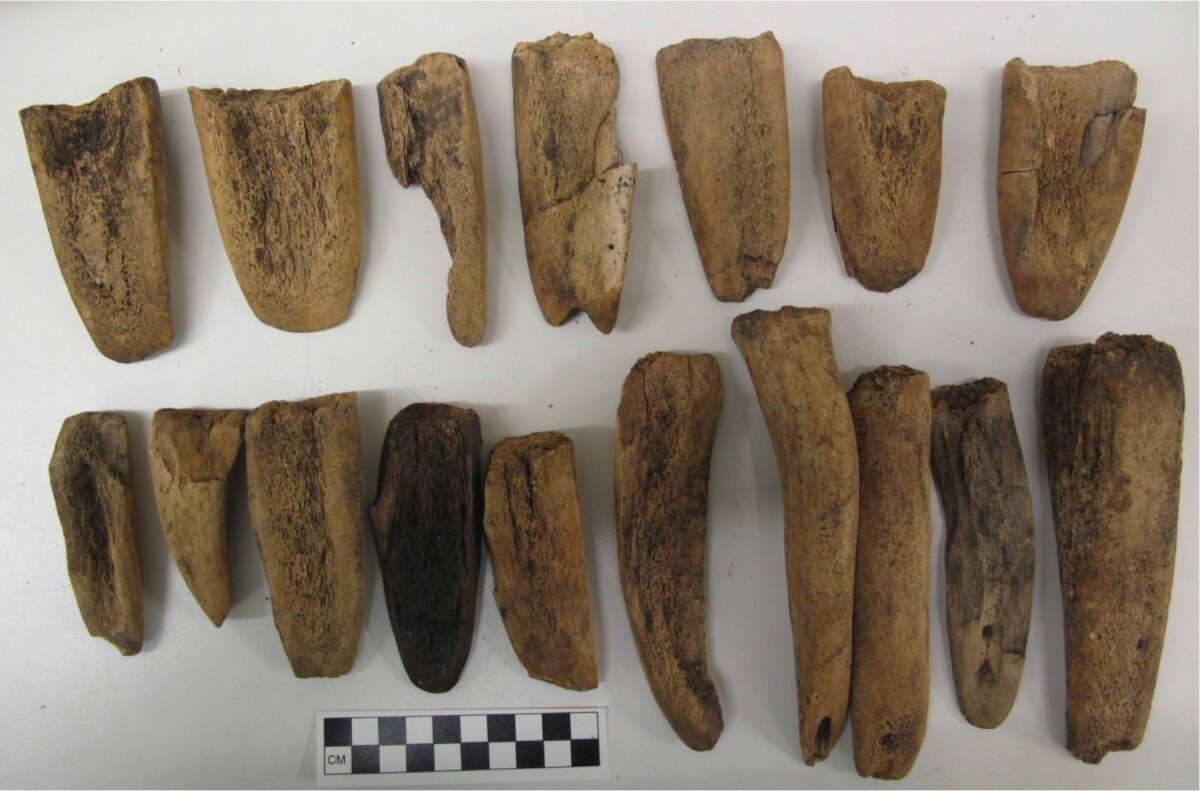
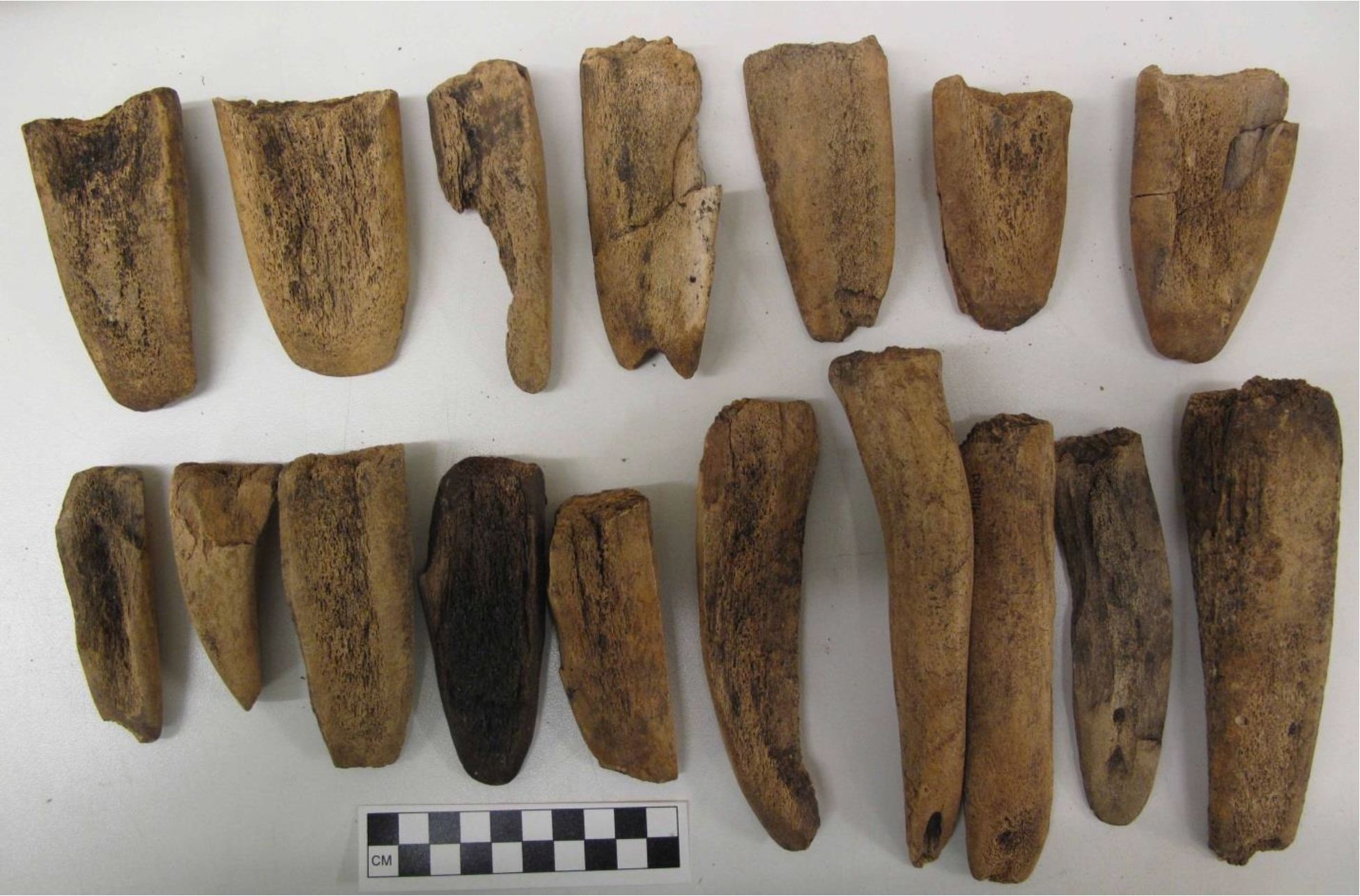
2018. By Grant Keddie Introduction Wooden and antler wedges are a common tool found in the Northwest Coast cultural area of North America. The purpose of this article is to drive a wedge into our current thinking about wedges and to stimulate further research by making some observations based on Royal B.C. Museum archaeological and ethnological artifacts. I combine this view of collections with my own background experience in working with wedges. Wedges are commonly known to have been used for splitting fire wood, for the manufacture of posts and planks used in house construction, household items such as boxes and bowls, and for the whole process of canoe making from cutting down trees to splitting the tree trunks and … Continue reading “The Archaeology and Ethnology of Wedges on the Northwest Coast”