Bird Spears and Bird Arrows

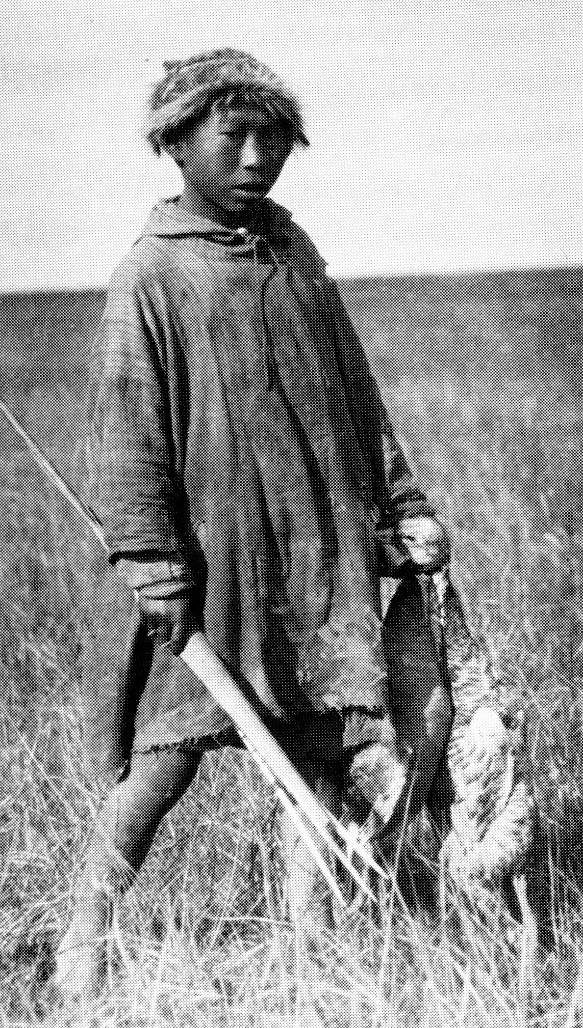
Grant Keddie. 2023. Introduction The identification of bone projectile points found in archaeological sites that were used as components of bird spears and bird arrows are difficult to identify. This is due, in part, to the lack of Museum ethnographic examples with accurate documentation. Old traditional bird spears or arrows are rare in Museum collections. With the introduction of iron and the gun, the components of the spears and arrows changed and then they disappeared from use. Bird spears have several components: a shaft, a central bone point with up to five other bone points of several sizes or two bone points positioned at the same level on the distal end of the spear. Most of these are barbed but … Continue reading “Bird Spears and Bird Arrows”
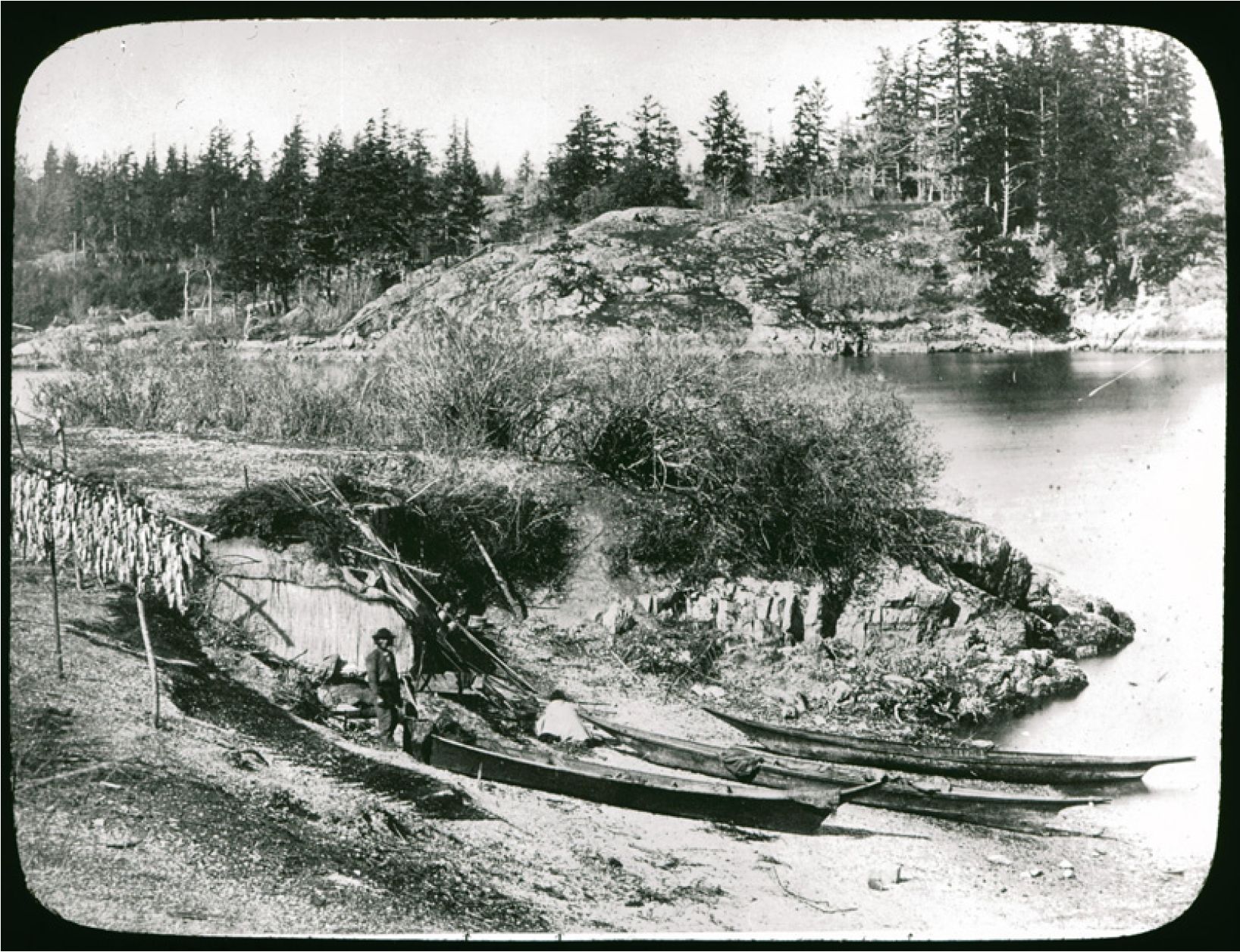
A Lekwungen Herring Fishing site in Esquimalt Harbour: A Unique photograph in the Collection of the Royal B.C. Museum

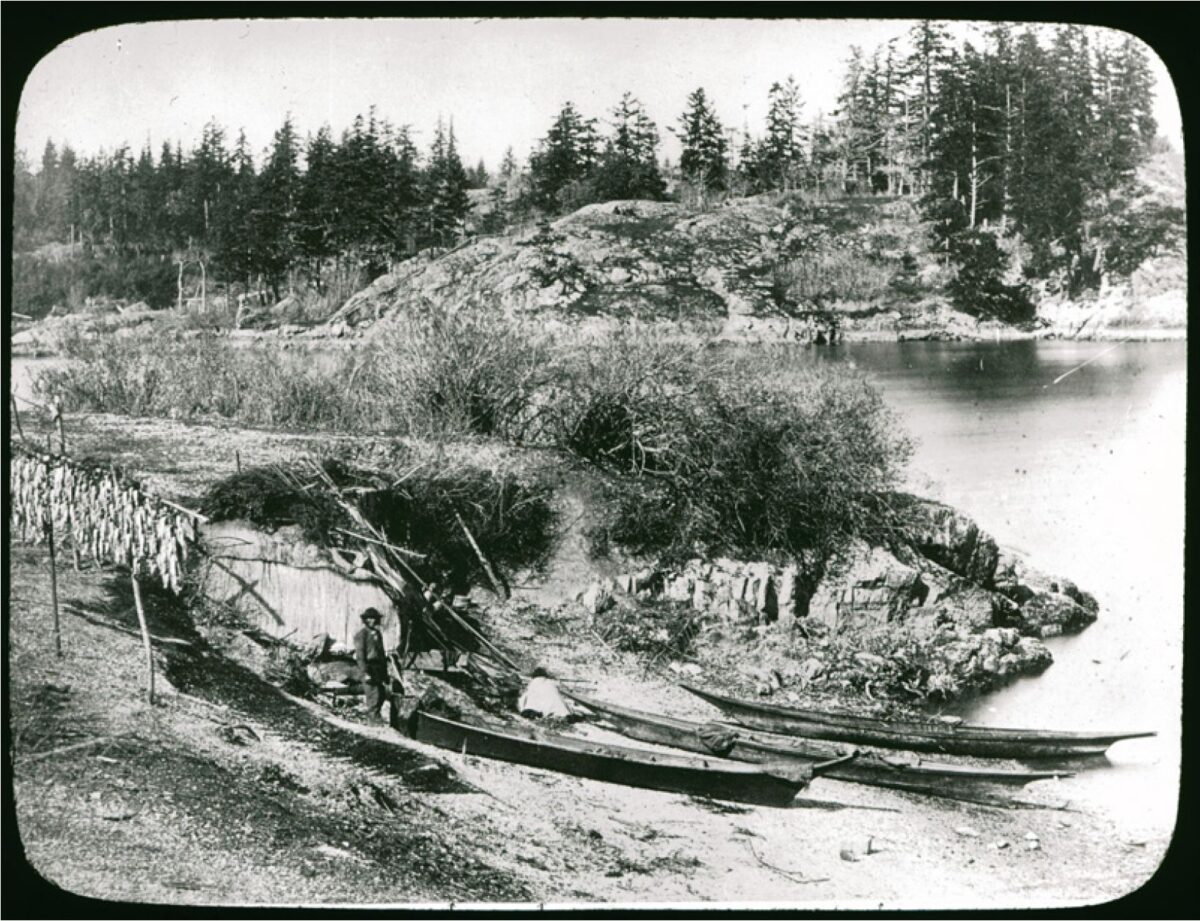
By Grant Keddie. Nov 2016. 19th century photographic images in the Victoria region that show Lekwungen (Esquimalt and Songhees First Nations) undertaking traditional food gathering practices are rare. The only example of fishing is a photograph, taken in 1868, by Frederick Dally in Esquimalt harbour at the south entrance to Lang Cove (RBCM PN905). Lang Cove is located south of Skinner’s Cove, both of which are within the larger Constance Cove. This is the location of an ancient shellmidden as demonstrated by the scattered white clam shells seen in the image and later observed by the author at this location. This image (fig. 1 and close-up fig.2) of a man and woman at a herring fishing site is listed in … Continue reading “A Lekwungen Herring Fishing site in Esquimalt Harbour: A Unique photograph in the Collection of the Royal B.C. Museum”

Lekwungen Resources. Part 1. Fishing

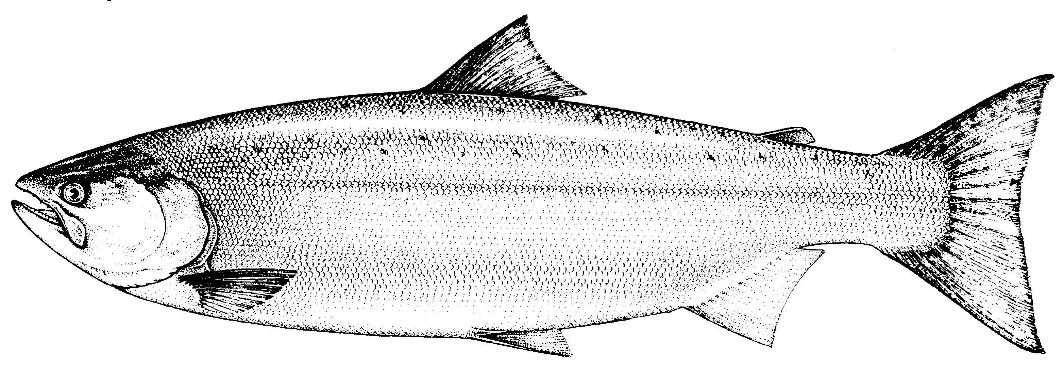
Introduction Fishing was a major part of the traditional Lekwungen economy. The availability of some fish resources, however, changed on a decadal basis because of the changing water temperatures (Chevez et. al. 2003) and the intensity of important seasonal fish runs could vary over longer periods of time due to other climatic factors (Finney et. al. 2000 and 2002). There were times when the salmon runs did not arrive or drought conditions prevented them from running up local streams. People then had to refocus on other resources or starve. Although a few species of fish were often considered the most important, the old village sites reveal the remains of numerous species. Not enough analysis of fish remains from sites has … Continue reading “Lekwungen Resources. Part 1. Fishing”

The Oldest Elk on Vancouver Island

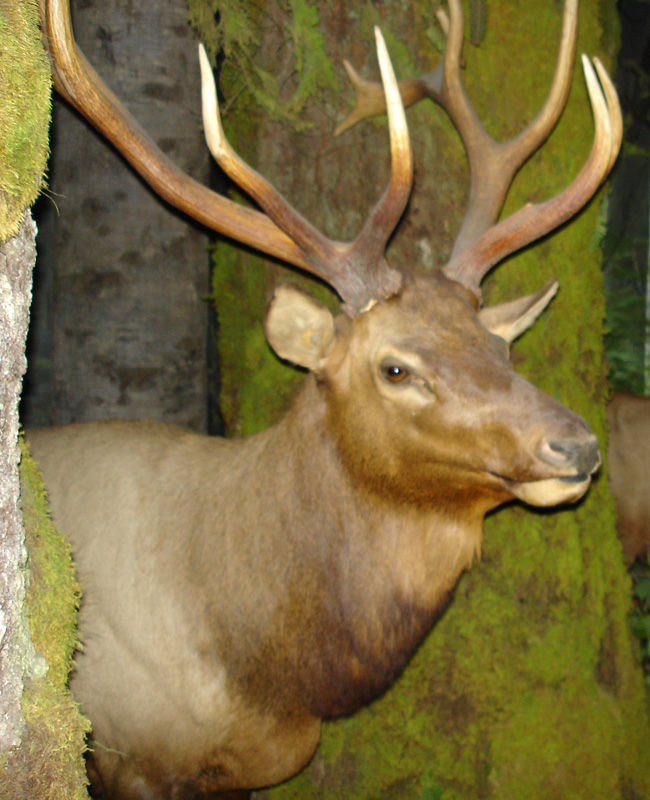
Introduction The elk or wapiti (Cervus canadensis) has long been important to Indigenous peoples as both a source of food, clothing and raw materials and were likely hunted by Indigenous peoples when they first appeared on Vancouver Island. The ancestors of today’s North American elk expanded from Siberia into the new world (Meirav et. al. 2014). They may have taken both inland and coast routes. How long they have existed on Vancouver Island is a subject of interest that has yet to be determined. Could elk have survived on the Island since the last interglacial period? The Changing Climate We do not have much detail on what food resources would be available to elk during the cold periods of the … Continue reading “The Oldest Elk on Vancouver Island”

Mastodon. In the Royal B.C. Museum Collection

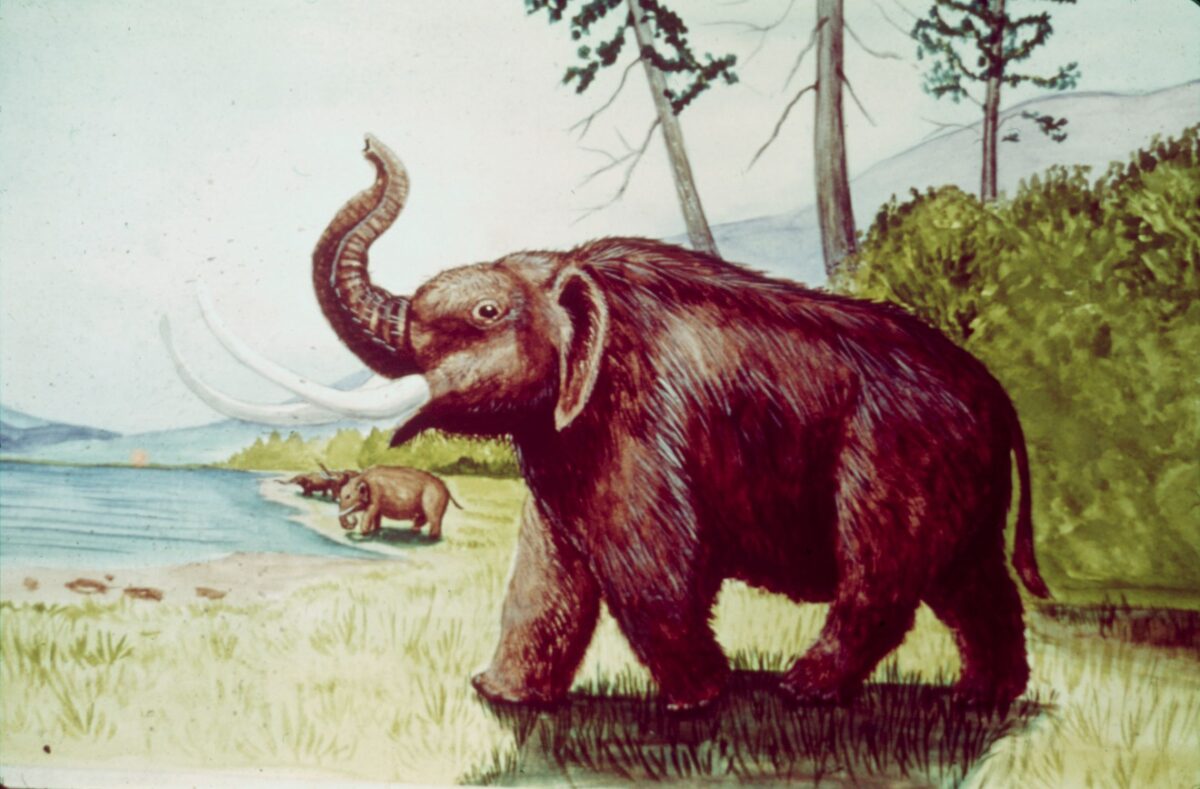
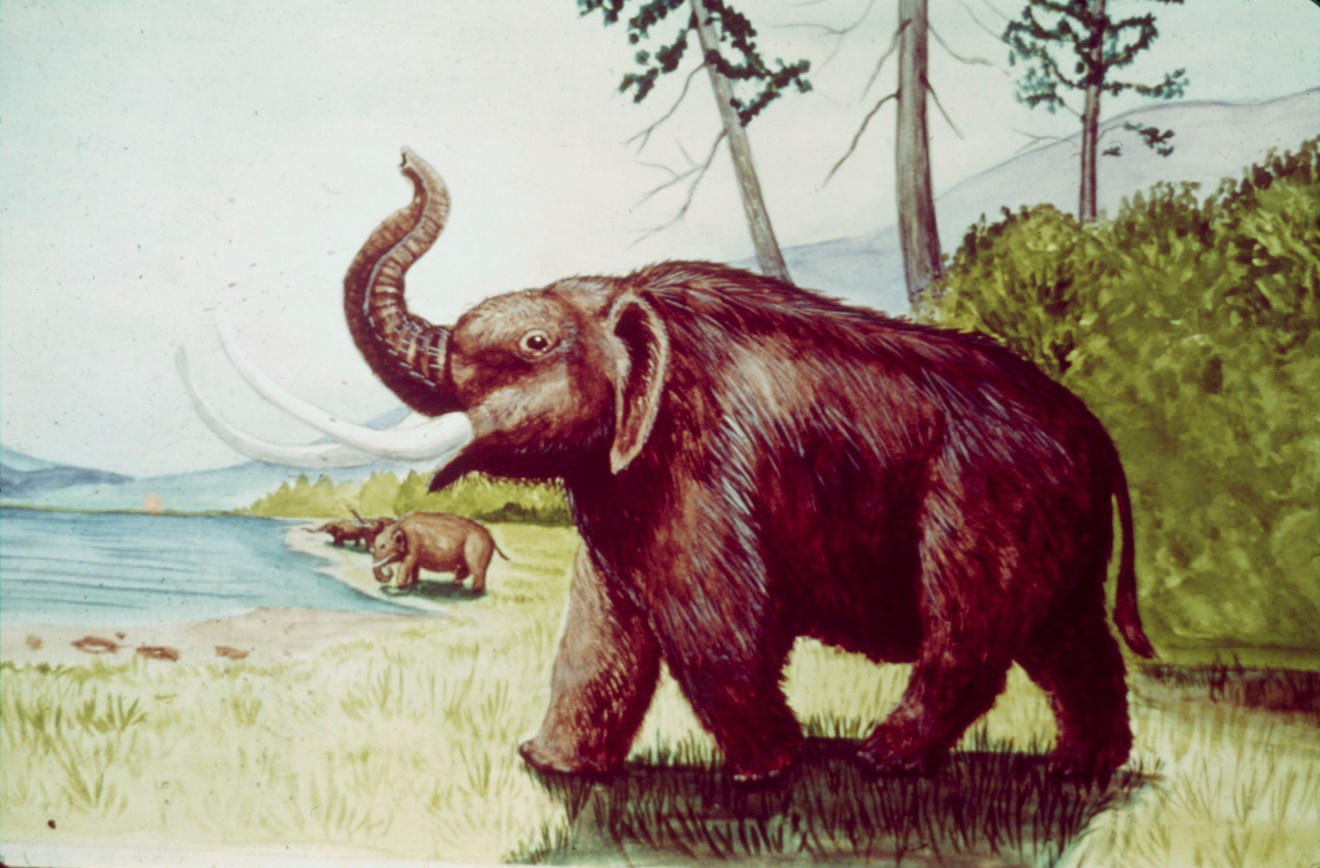
By Grant Keddie. 2016. Introduction Included here are notes on three mastodon (Mammut americanum) molars in the Royal B.C. Museum Collection and one private collection specimen. Three are from the South-East Corner of Vancouver Island and one from the Yukon Territory. Two of these have been found in the same locations as a larger number of mammoth remains. Although there are interglacial deposits in the areas where the mastodon remains of southeastern Vancouver were found, most of the fossil bearing layers have been deposited in front of the advancing glaciers during cold conditions between about 22,000 and 18,000 years ago. Later around 16,000 to 15,000 years ago ice sheets from the Fraser glaciation passed over the area depositing layers of … Continue reading “Mastodon. In the Royal B.C. Museum Collection”

Mistaken Indigenous Wool Dogs

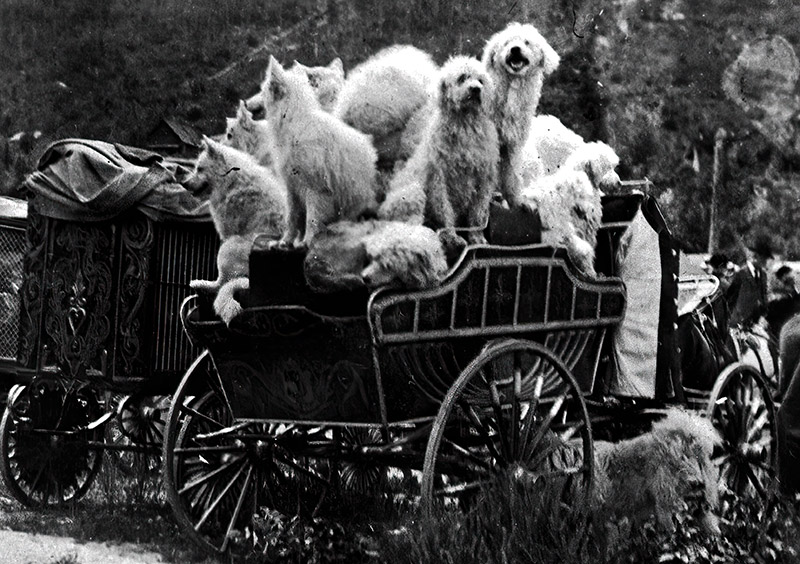
By Grant Keddie. June 3, 2023. Introduction It has occasionally been assumed that photographs of small white dogs with Indigenous people or on Indigenous reserves in late 19th and early 20th century are “wool dogs”. This is not likely the case as these dogs had become extinct as a physical type before this time period. The dog images referred to above do not fit specific characteristics of the wool dogs and are most likely one of several varieties of small white dogs introduced from Europe as far back as the 1850s. See Appendix 1 for the images and commentary on dogs suggested as wool dogs. In 19th century British Columbia non-Indigenous dogs were brought here by explorers, gold miners, surveyors, … Continue reading “Mistaken Indigenous Wool Dogs”

The Human And Natural Modification Of Bone Assemblages From Mountain Caves And Rock Shelters On Vancouver Island

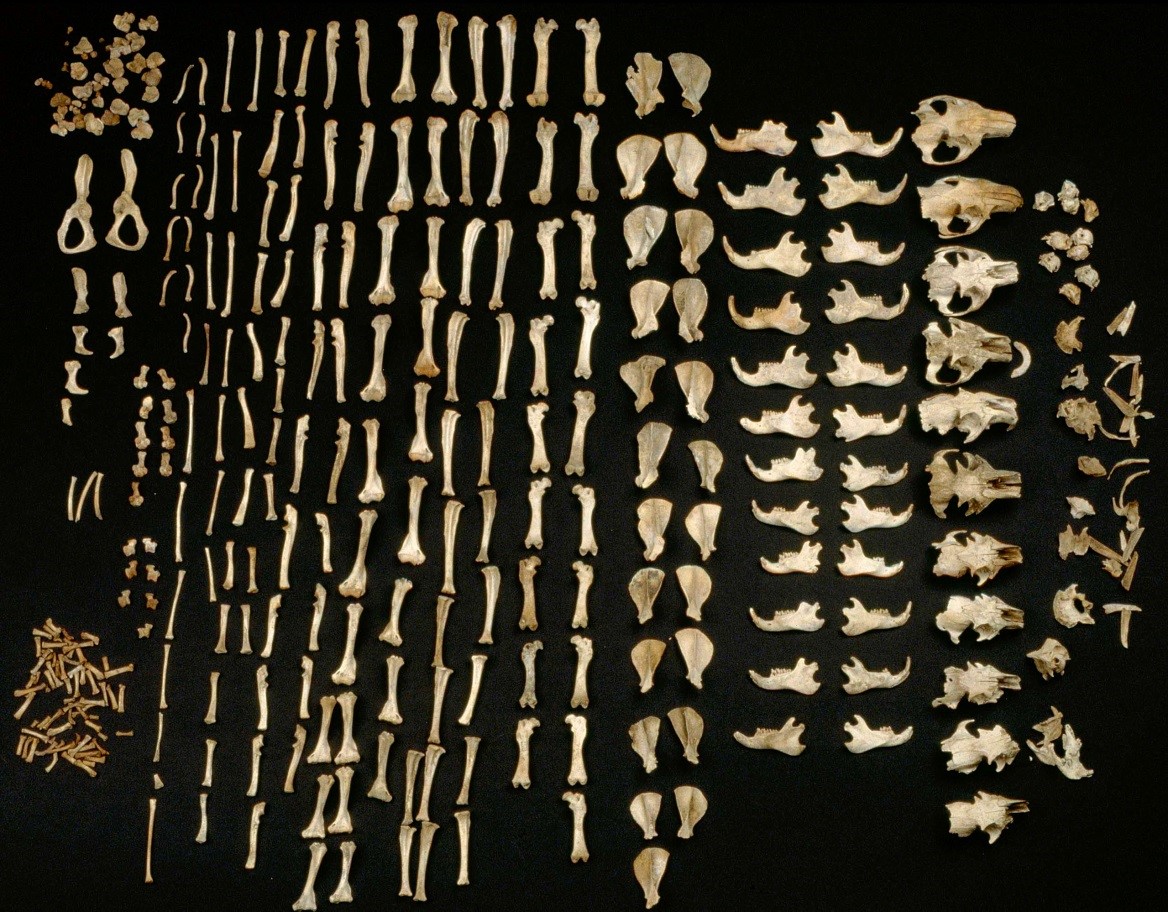
By Grant Keddie. 1995. Primarily Vancouver Island Marmot with Bear and Deer. Preface This document is intended as a working technical manuscript from which information will be extracted for other reports and publications related to the Vancouver Island Marmot Cave Project undertaken jointly by Mammologist Dave Nagorsen and myself. The bone element database, metric summaries, analysis and biogeographical data on modern marmots is not included here. Introduction This study represents the physical examination of thousands of discarded bone remains found on the surface in caves or rock shelters at four high elevation mountain hunting locations: the Mariner Cave (elevation 1220M), on Mariner Mountain and the Golden Hinde Rock Shelter (1420m) on Golden Hinde Mountain, both in Strathcona Provincial Park; Clayoquot … Continue reading “The Human And Natural Modification Of Bone Assemblages From Mountain Caves And Rock Shelters On Vancouver Island”

The Archaeology and Ethnology of Wedges on the Northwest Coast

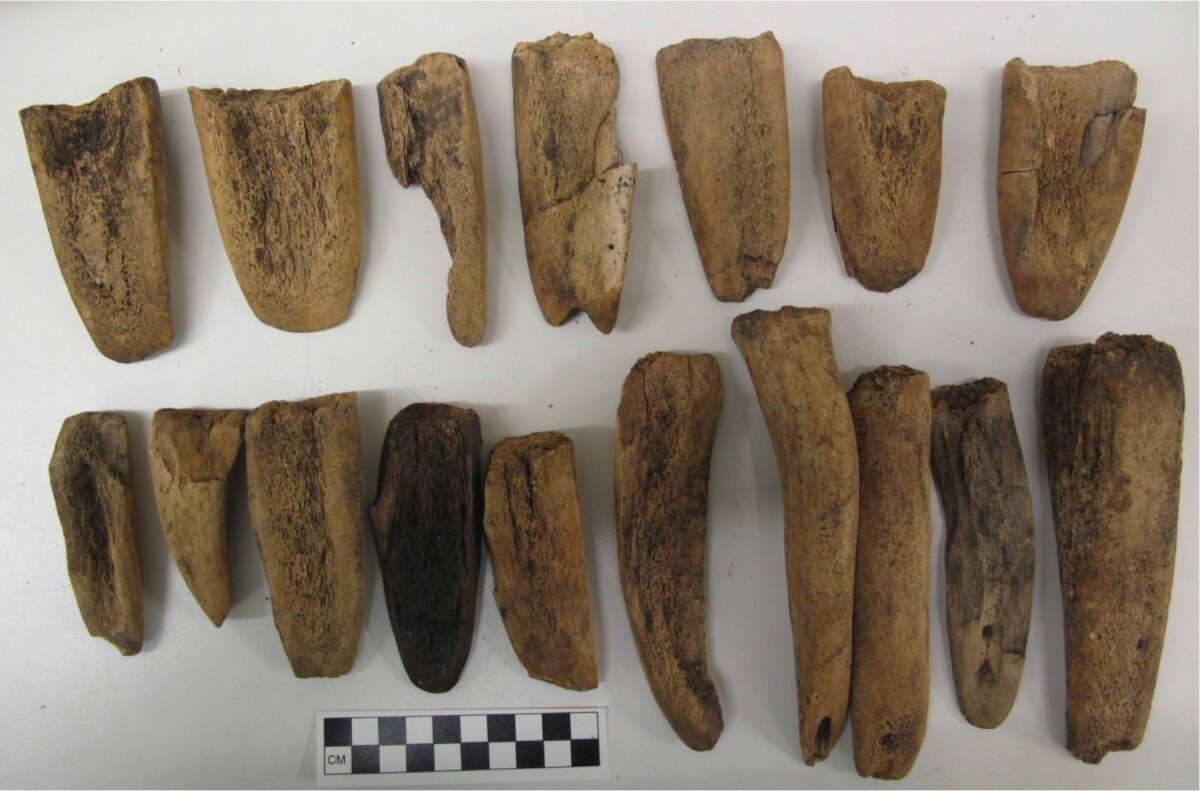
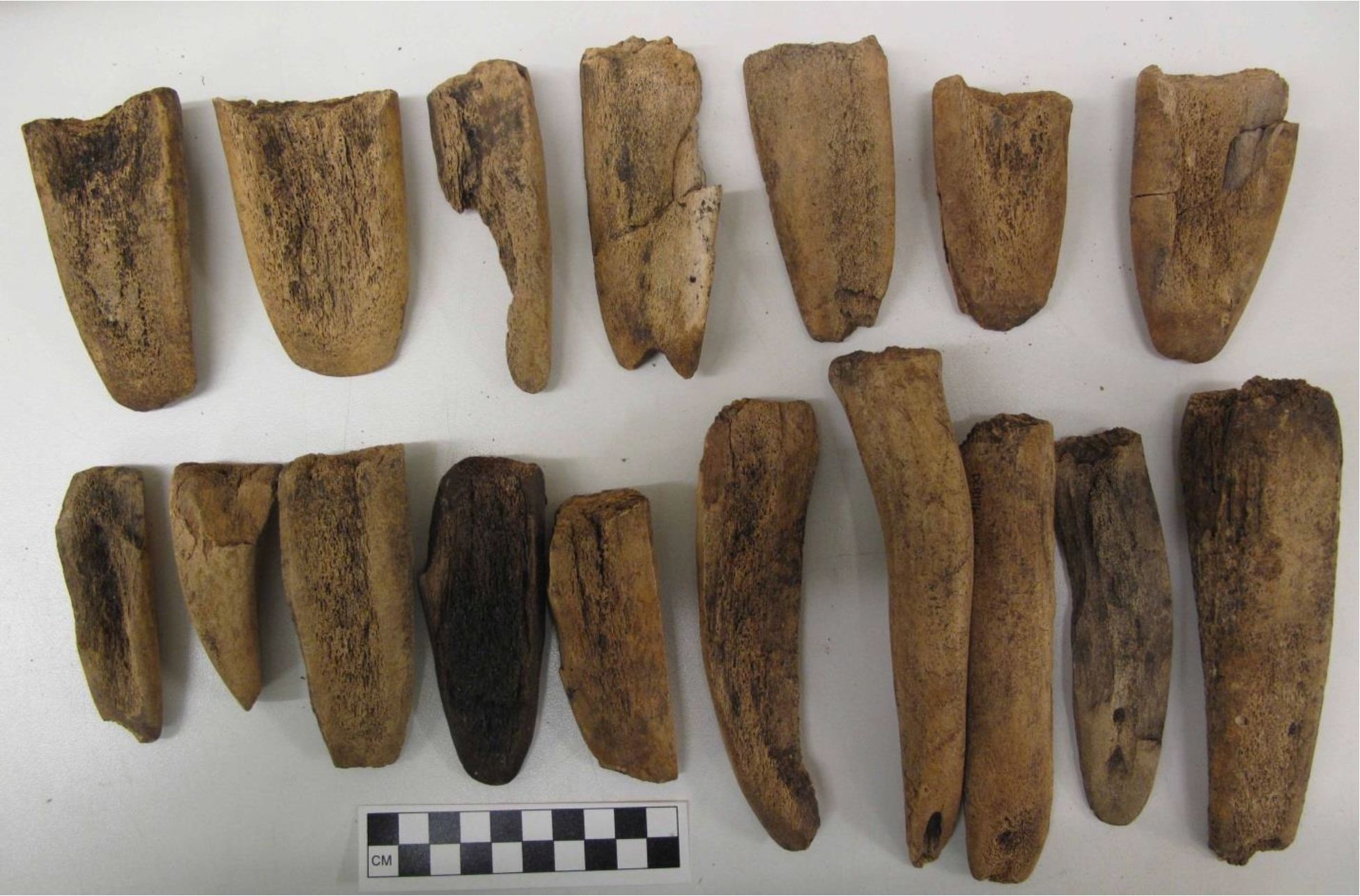
2018. By Grant Keddie Introduction Wooden and antler wedges are a common tool found in the Northwest Coast cultural area of North America. The purpose of this article is to drive a wedge into our current thinking about wedges and to stimulate further research by making some observations based on Royal B.C. Museum archaeological and ethnological artifacts. I combine this view of collections with my own background experience in working with wedges. Wedges are commonly known to have been used for splitting fire wood, for the manufacture of posts and planks used in house construction, household items such as boxes and bowls, and for the whole process of canoe making from cutting down trees to splitting the tree trunks and … Continue reading “The Archaeology and Ethnology of Wedges on the Northwest Coast”

Late Pleistocene Mountain Goats (Oreamnos Americanus) from Vancouver Island: Biogeograhic Implications

Originally published in the Journal of Mammalogy, 81(3), 666—675. 2000. By David W Nagorsen and Grant Keddie Abstract Although Oreamnos americanus is absent from most Pacific Coast islands, including Van­couver Island, 12,000-year-old skeletal remains were recovered in 2 caves on northern Vancouver Island. The specimens may represent early postglacial immigrants or a relict population derived from a coastal glacial refugium. Limb bones of the fossils are within the size range of modern specimens, suggesting a postglacial origin. O. americanus prob­ably became extinct on Vancouver Island during the early Holocene warming, but inadequacies in the prehistoric faunal record prohibit a determination of a terminal date. The modern distribution of O. americanus on Pacific Coast islands reflects both prehistoric extinctions and low … Continue reading “Late Pleistocene Mountain Goats (Oreamnos Americanus) from Vancouver Island: Biogeograhic Implications”

Bird Bone Tube Snare Guards in the Archaeology Collection of the Royal B.C. Museum

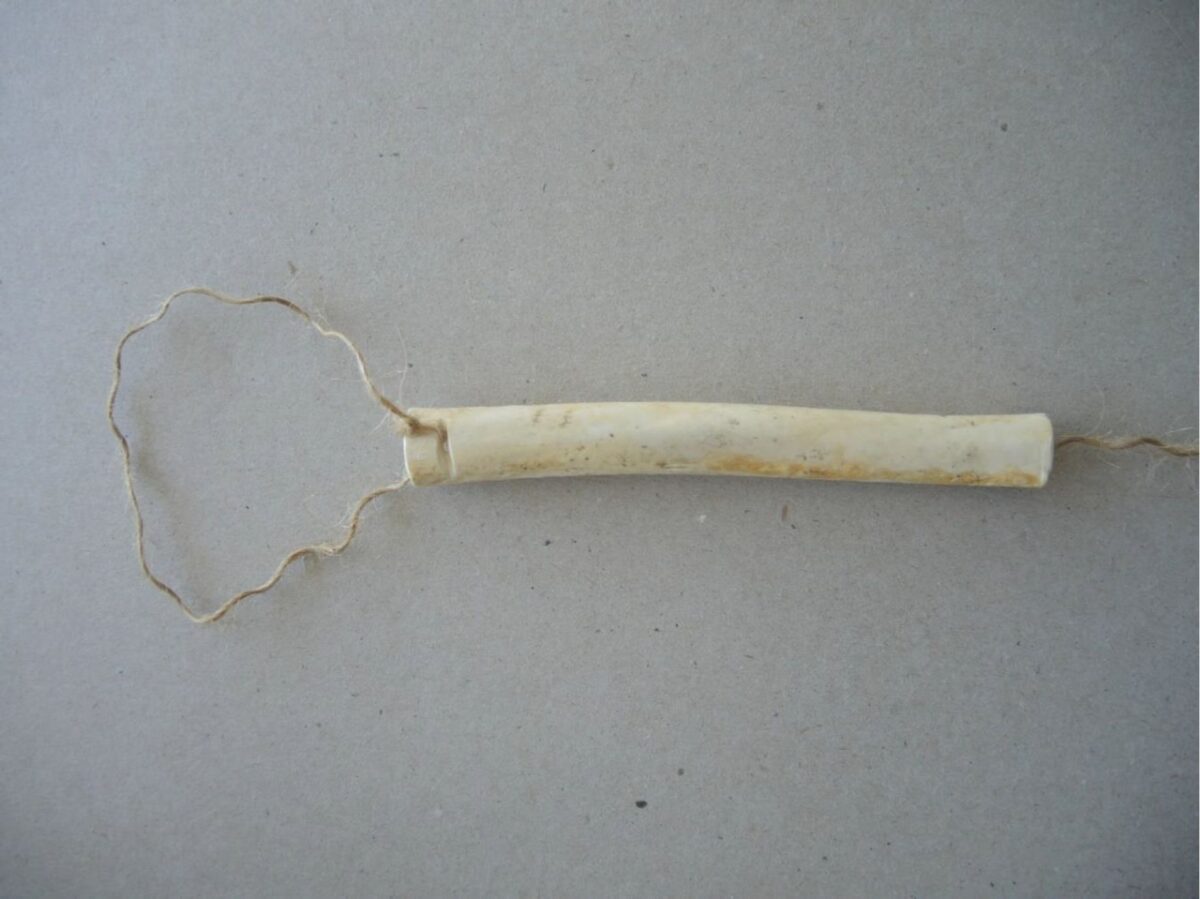
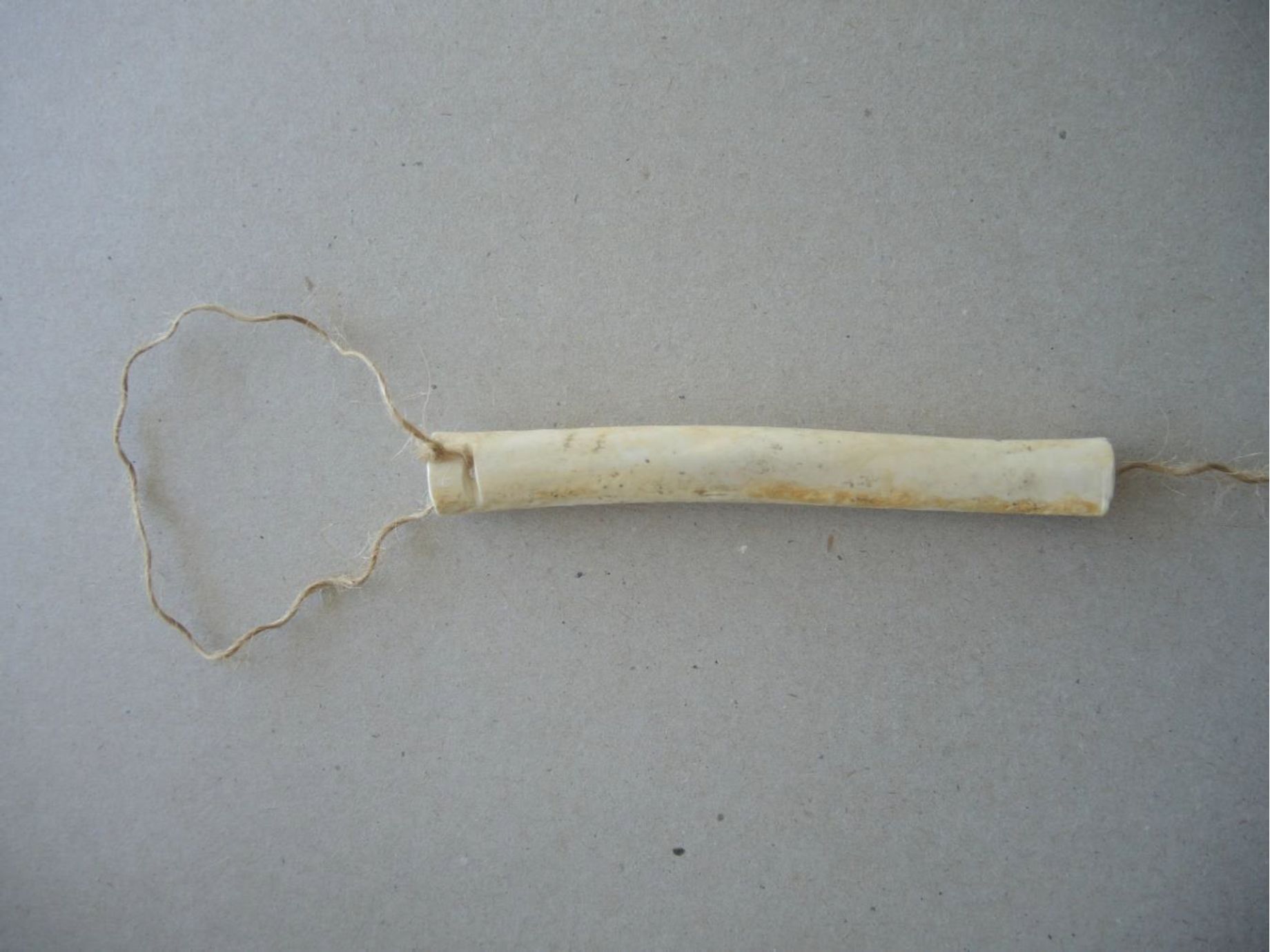
June 3, 2019. By Grant Keddie Introduction There are many different sizes of bird bone artifacts found in archaeological sites in British Columbia. The function of many of these remains unknown. There is often no comparable artifact type in the ethnographic record. They are sometimes ascribed functions by archaeologists for which there is no evidence. Some of the long bird bone tubes referred to as “drinking tubes” are in fact, what I am calling bird bone snare guards – devices on snares which prevent marmots and ground squirrels from biting through the noose cord and escaping.   Here I present the evidence of how I determined, from my own observations and technology experiments, that some of the unidentified bird bone … Continue reading “Bird Bone Tube Snare Guards in the Archaeology Collection of the Royal B.C. Museum”